THE ORIGINAL JUMP CHART
Know the names.
Find your style.
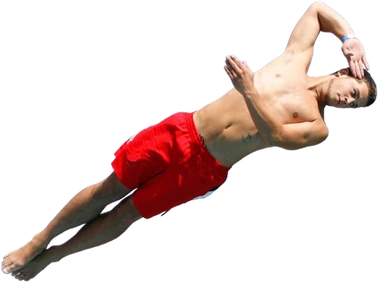
What do athletes mean by Ripper, Cannonball or Open L-Vis? The Jump Chart connects the names of landing positions with their illustrations. Select any of the 13 positions in this original artwork and compare its name and depiction. It is a way to understand the sport’s shared vocabulary, not to turn a picture into an exercise instruction.
Explore the positions

One Chart. Your overview.
13 names. 13 original illustrations. Choose a card to explore its landing position in the larger view. The complete Jump Chart is shown above and can be opened using the original-image link.
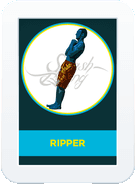
Ripper selected.
Your selection
Ripper
A straight body line. Focus on a stable posture and body tension.
Choose another position ↓Swipe through the 13 positions.
A position name is not a difficulty rating or permission to jump. Learn in a suitable facility with qualified supervision and follow the operator’s rules. This chart does not establish a safe height or water depth for any position.
The original. In full.
Oliver Hillebrecht created the original Jump Chart in 2007. Since then, only Open L-Vis, the most difficult landing position on the chart, has been added.
Body control · Original archive 2005
This is not chance.
This is skill.
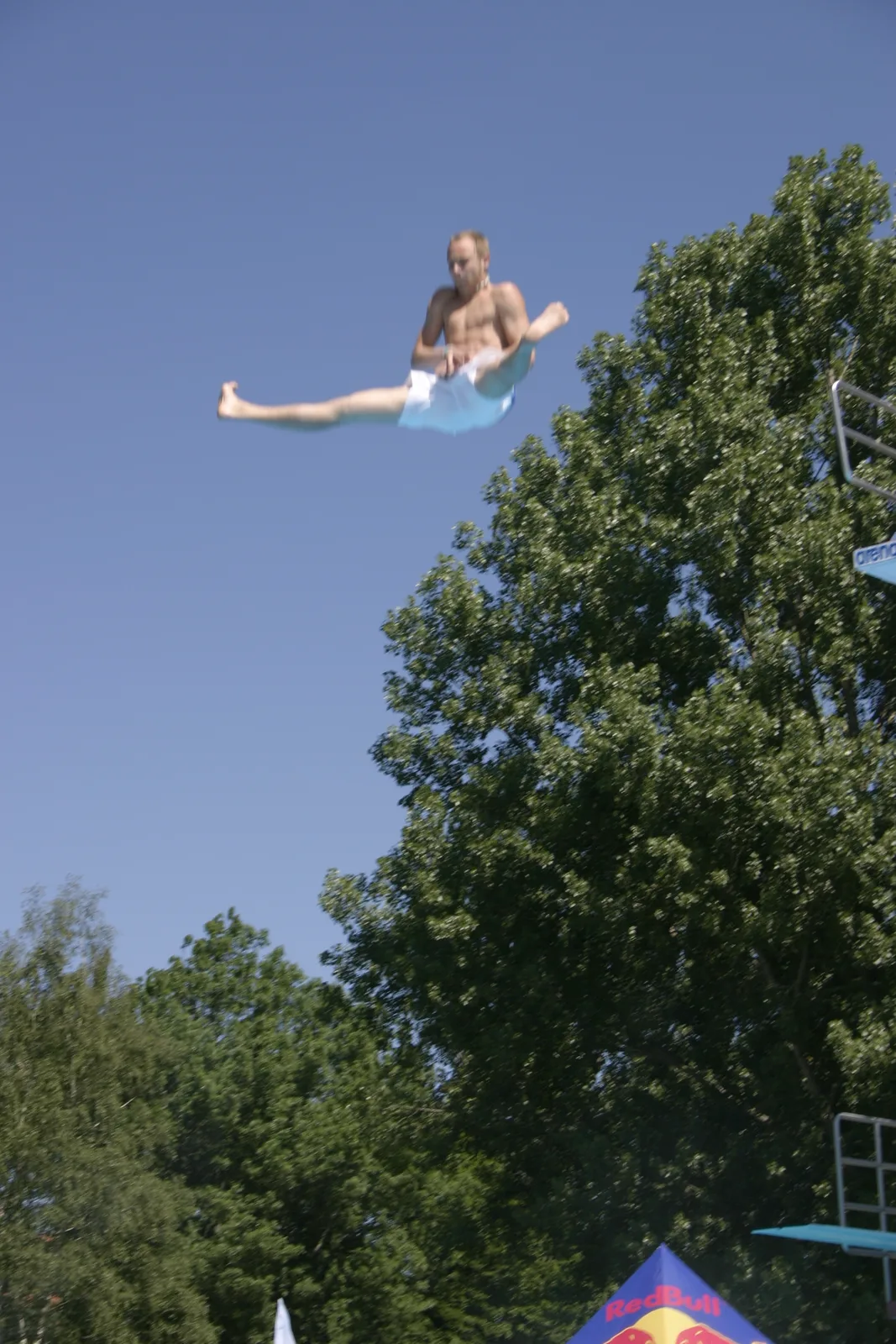
It looks like courage. Above all, it is skill. Christian “Elvis” Guth’s wide-open leg position shows the body control, flexibility and precision that Splashdiving demands.
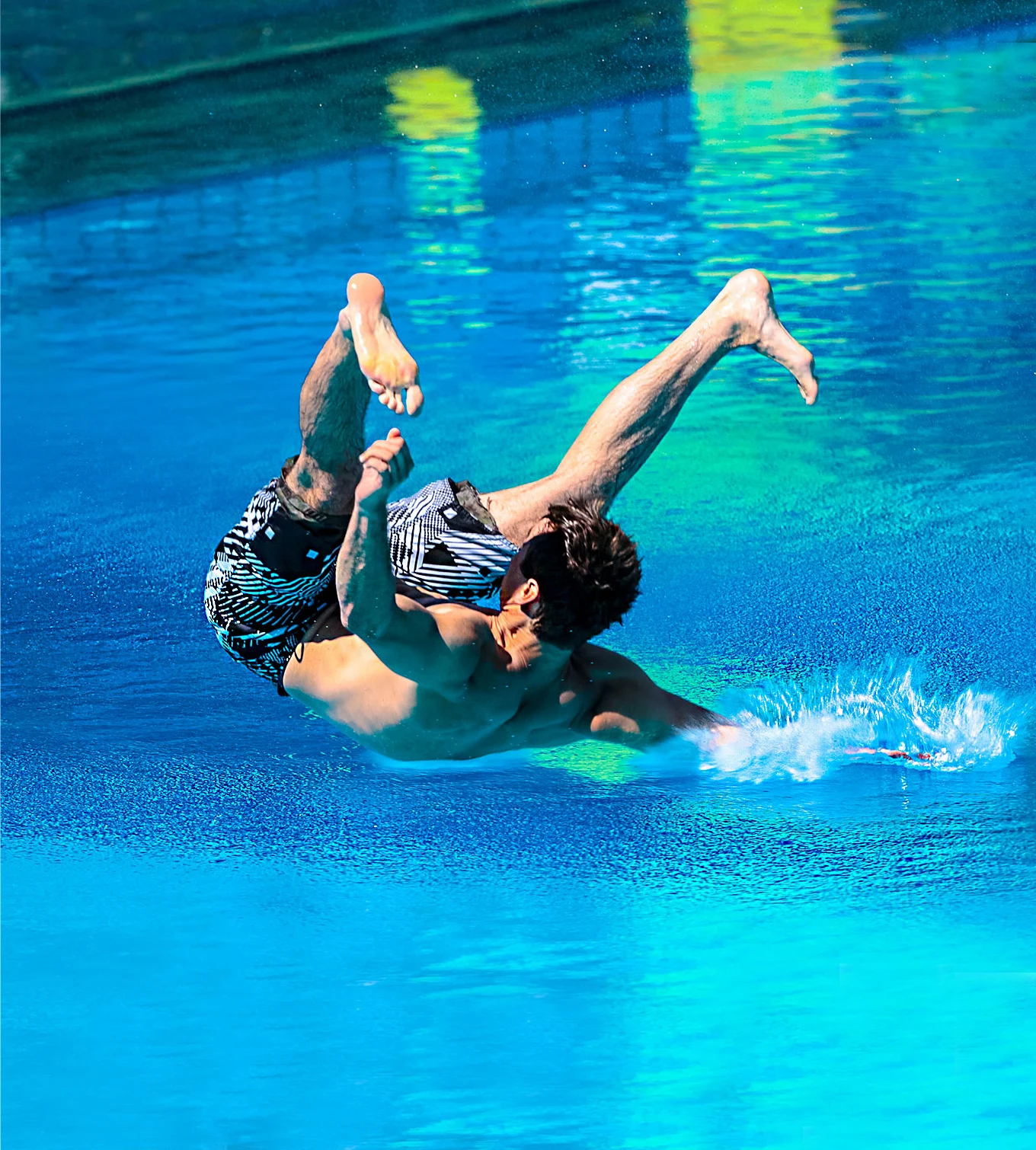
These photographs from 2005 capture the deliberate preparation of a position in the air. The splash is the visible finale. The work happens before it.
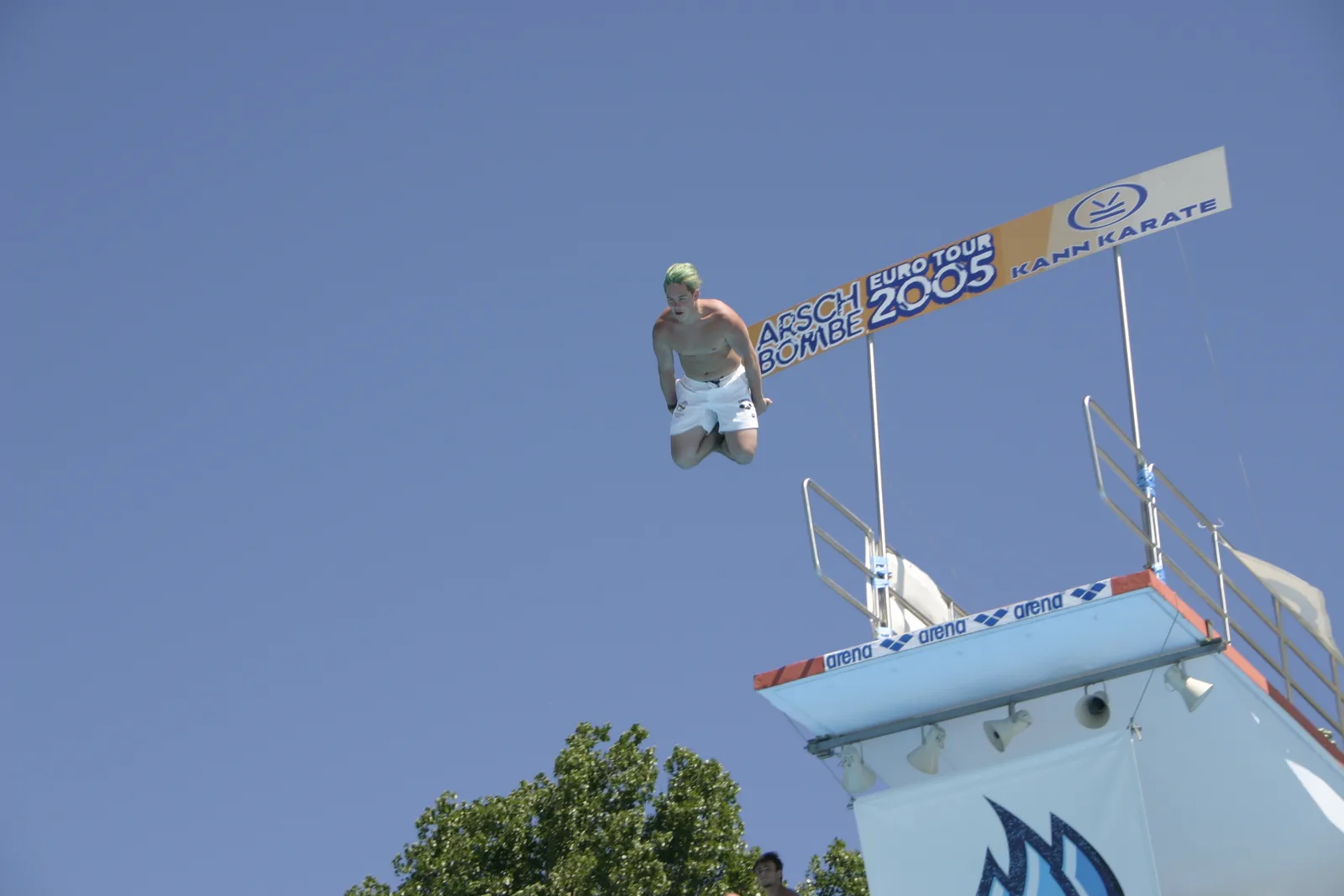
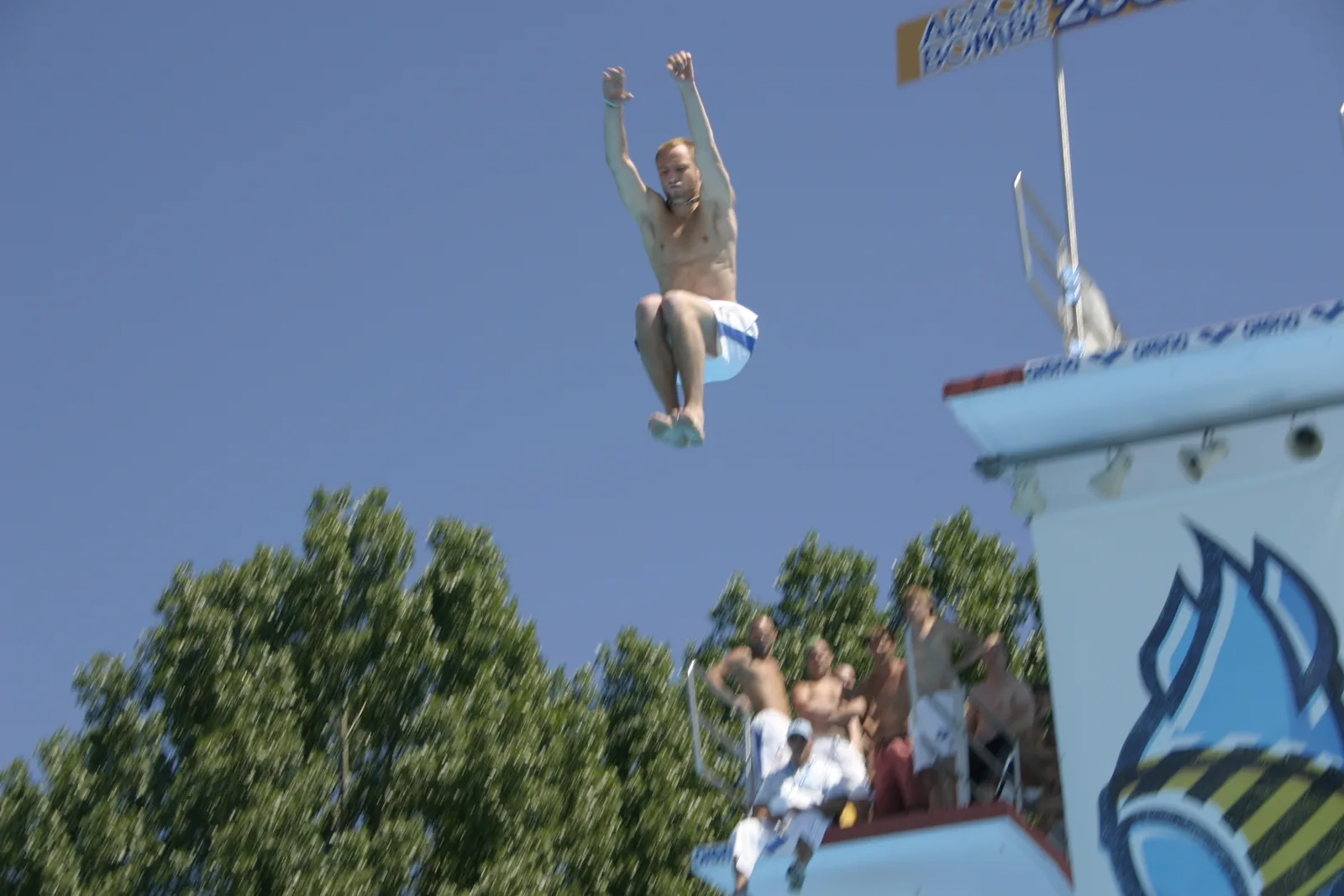
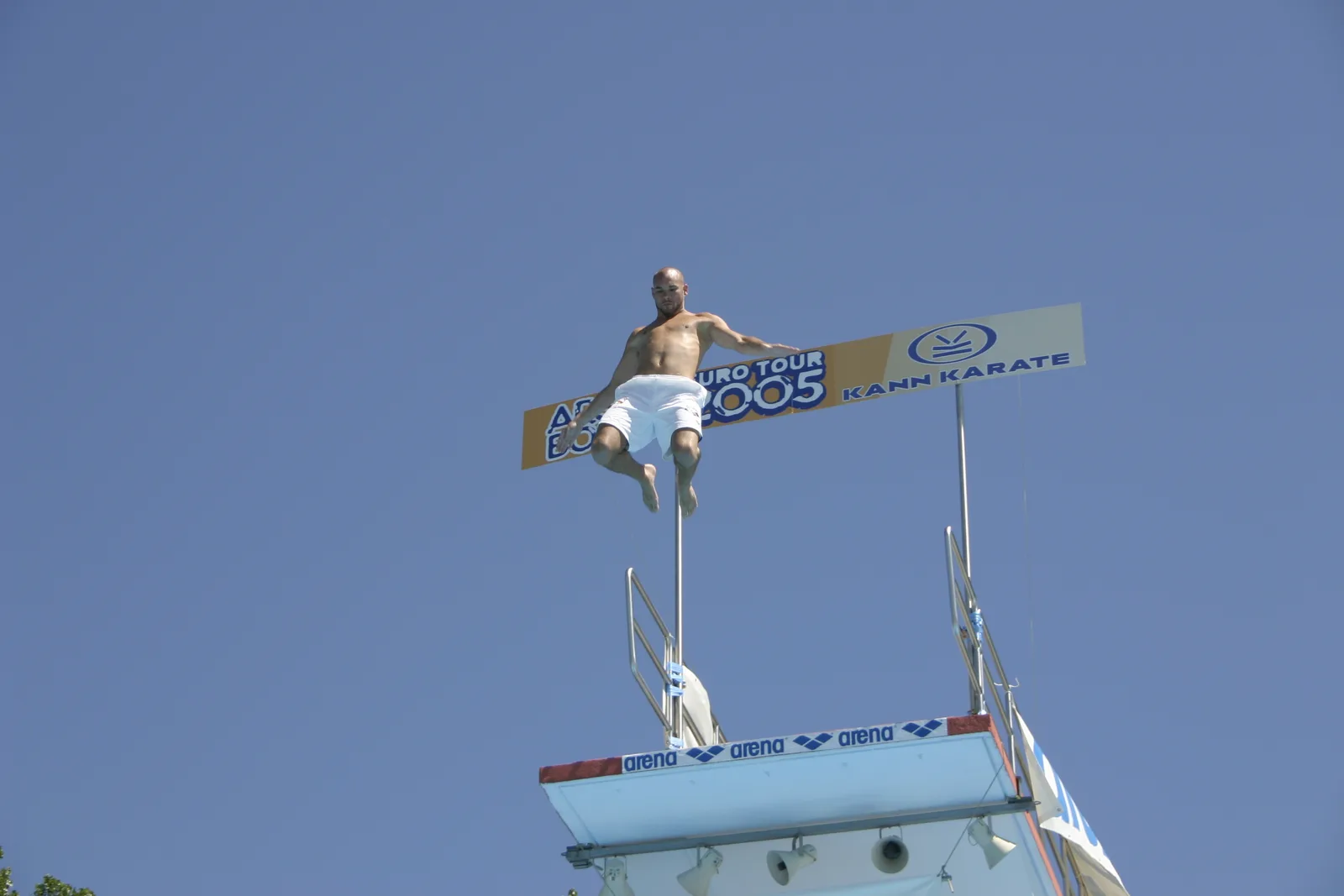
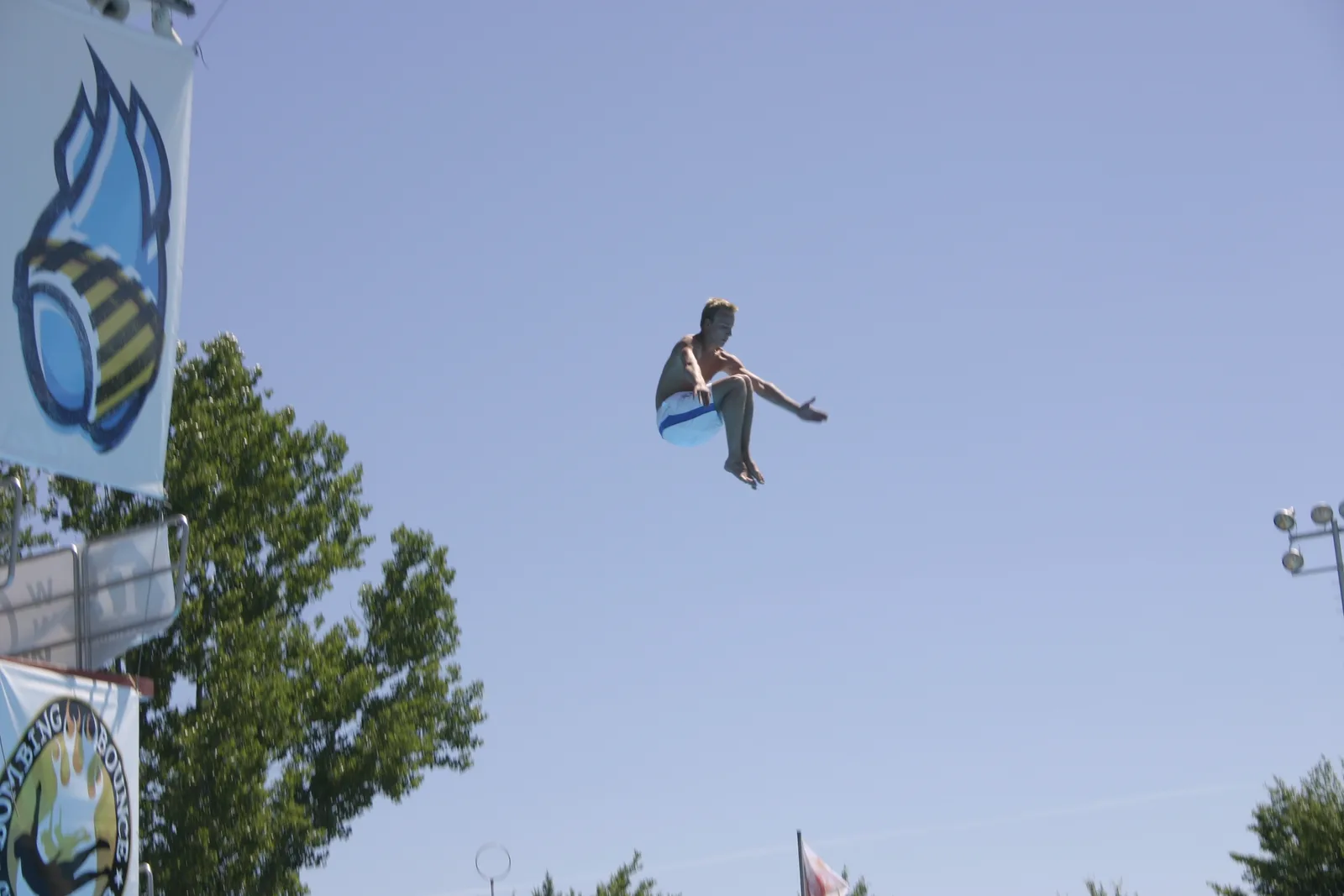
Historical photographs from 2005, not step-by-step instruction. Practise only with qualified guidance and under approved conditions.
Historical document · 2005
When it was still
called Arschbombe.
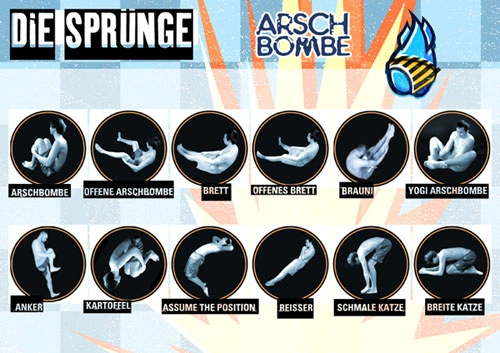
This early jump overview dates from the Arschbombe era in 2005. It documents the visual identity and the names of positions at that time. The historical graphic is preserved in full.
Archive, not training instruction. The historical graphic also includes “Assume the Position”. This risky position is not a recommendation to imitate it. The archive image is neither the current rulebook nor an approval of the jumps shown.
More from the original archive of 2005 ↗From the archive of Oliver Hillebrecht · 2005. Historical images, not jump instructions.