SPLASHDIVING ★ JOURNAL
Stories that stay.
A pool. A leap. A scene that keeps moving. Discover the people, competitions and ideas behind Splashdiving, from the early days to the next chapter.
Explore the archive
The long read · Recollections from the beginning
Before it is called Splashdiving.
How a poolside idea becomes a sport. Oliver Hillebrecht recalls the people, jumps and decisions behind the original, from 2003 to 2010. Recollections recorded in 2026.
Read the origin storyEvery summer leaves a story.
History, events, media and learning. Arranged by their documented historical dates, not by the date we digitised them.
The live archive could not be refreshed. The saved articles remain available.
Cup 2021. Back by the water.
Eighteen original photographs of the Splashdiving Cup 2021: the event setting, athletes in flight and encounters beside the pool. A newly prepared archive photo story.
Original photo archive · 28/29 August 2021 · Credits: SCS.
Read the photo story ↗Sindelfingen. A weekend by the water.
Sindelfingen's outdoor pool lists the Splashdiving Cup for 26 to 28 June 2026. The organiser's retrospective archive confirms that the weekend took place.
Stadt Sindelfingen · Veranstaltungseintrag · 24.06.2026 ↗
Read storyPfaffenhofen. One pool, many possibilities.
Summer Splashdown 2025 brings professionals, pool visitors and two competition strands together at the Ilmbad. A summer chapter from Pfaffenhofen.
Veranstalterbericht · Splashdiving PAF TV · pafunddu.de · 24.06.2025 ↗
Read storySindelfingen. A weekend by the tower.
In June 2024, the fifth Splashdiving Cup brought several platform and board heights together at Sindelfingen’s outdoor pool. A local preview and the organiser’s archive document the weekend.
SZ/BZ · Annette Nüßle · 13.06.2024 ↗
Read storyGood cards. A fresh way into learning.
Thirteen illustrated cards, visual tasks and shared learning: vlamingo's Arschbomben-Challenge brings a structured resource to swimming lessons.
vlamingo · Originalangebot und Urheberangaben · Erstveröffentlichung 01.03.2024 ↗
Read storyBR freizeit: Schmidt Max meets Splashdiving
BR freizeit followed Schmidt Max’s introduction to Splashdiving with Oliver Hillebrecht. The schedule records a broadcast on 25 June 2023.
Bayerischer Rundfunk · freizeit ↗ ↗
Read storyFreising. From watching to taking part.
At Splash im Fresch, the national team, a workshop and everyday pool visitors meet. A story about turning fascination into a first step in learning.
Süddeutsche Zeitung · Freising · 26.07.2022 ↗
Read storySindelfingen: the announced championship weekend
The “Super Dive and Splashdiving World Championship” was announced for 16–17 July at Badezentrum Sindelfingen.
DIE NEUE 107.7 · Veranstaltungshinweis 2022 ↗ ↗
Read storyThe founder’s perspective: the art of the cannonball
An interview with Oliver Hillebrecht looks back at the format’s beginnings and development. It is a founder’s account, not a contemporary report from 2004.
Read story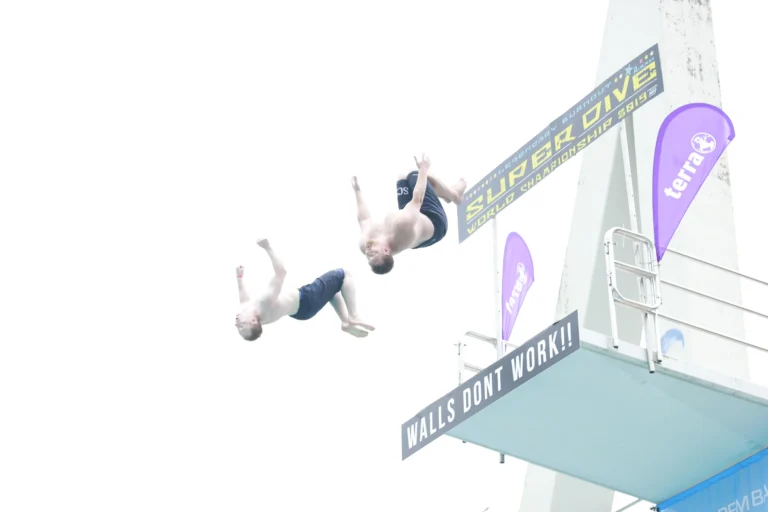
A weekend beside the pool.
SUPER DIVE – SPLASHDIVING WORLD CHAMPIONSHIP 2019. Jumps, faces and the life in between. These photographs from 27 and 28 July 2019 look beyond the tower to the people meeting around the pool.
Splashdiving · Photo archive ↗
Read the storyThe splash speaks many languages.
In 2019, Swimming World introduced Splashdiving to its English-speaking audience, turning a familiar diving perspective around: here, the splash is part of the expression.
Swimming World · Kaylie Williams · 17.03.2019 ↗
Read storySindelfingen: Splashdiving, Super Dive and an underwater record
On 21–22 July, the Sindelfingen championship shared its setting with another documented sporting event: Thomas Plum’s underwater walk.
TC Manatees · Vereinsarchiv 2018 ↗ ↗
Read story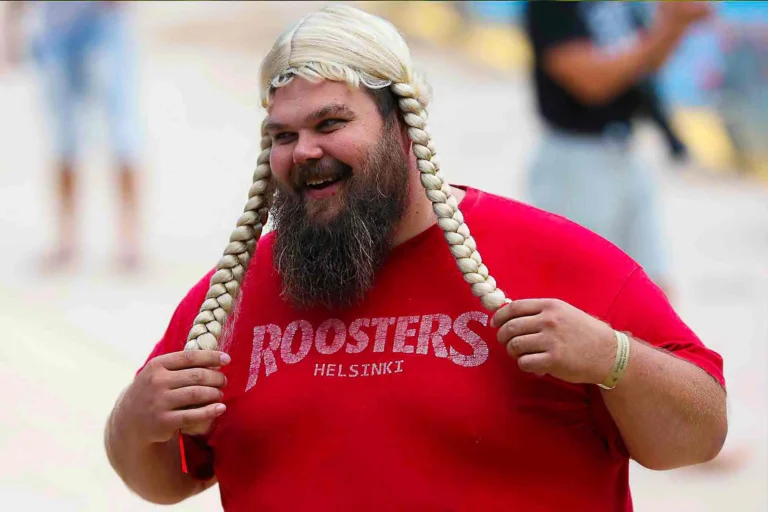
A little more summer. Images from the website archive.
A smile in a red shirt, people standing together, bodies beneath the surface. Thirty-one additional photographs open up the website collection filed under 2017, without inventing capture dates.
Undated original photographs ↗
Read the storySilkeborg. A voice from Denmark.
Jimmi Andersen brings competitive experience into a Danish television report. The account opens another window onto the sport in August 2017.
TV-2-Medienbericht / TV 2 Lorry · 13.08.2017 ↗
Read story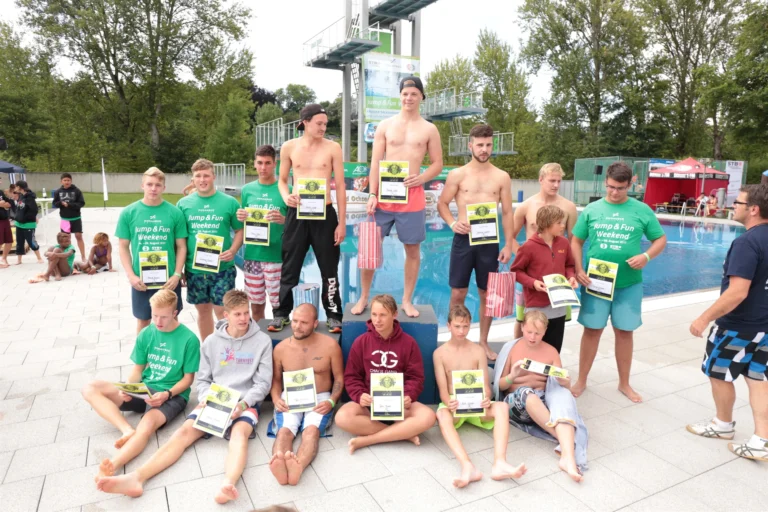
Ulm. A weekend, many faces.
The Jump & Fun Weekend at the Donaubad: dives, poolside encounters and the people who made the weekend happen. An extensive photo story from August 2017.
Read the story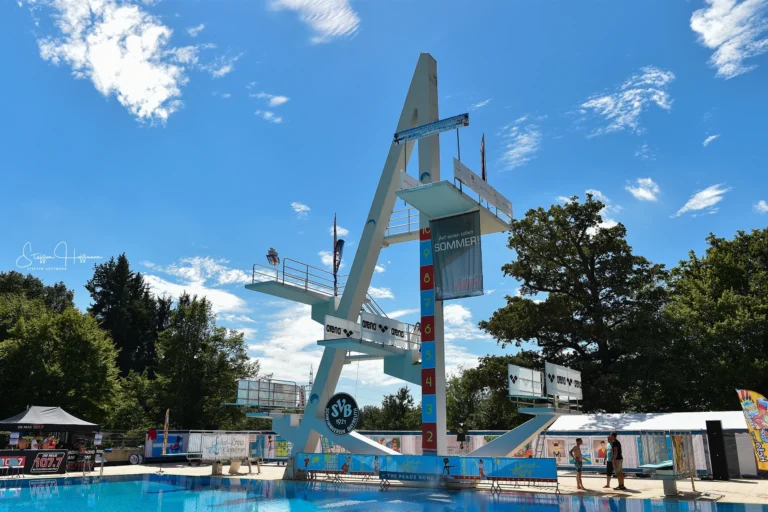
Sindelfingen. Above the water, together.
The 2017 world championships in Sindelfingen: synchronised gold for Maximilian Kolz and Christopher Becker, striking photography and the moments around the competition.
Deutschland.de · 26.07.2017 ↗ ↗
Read story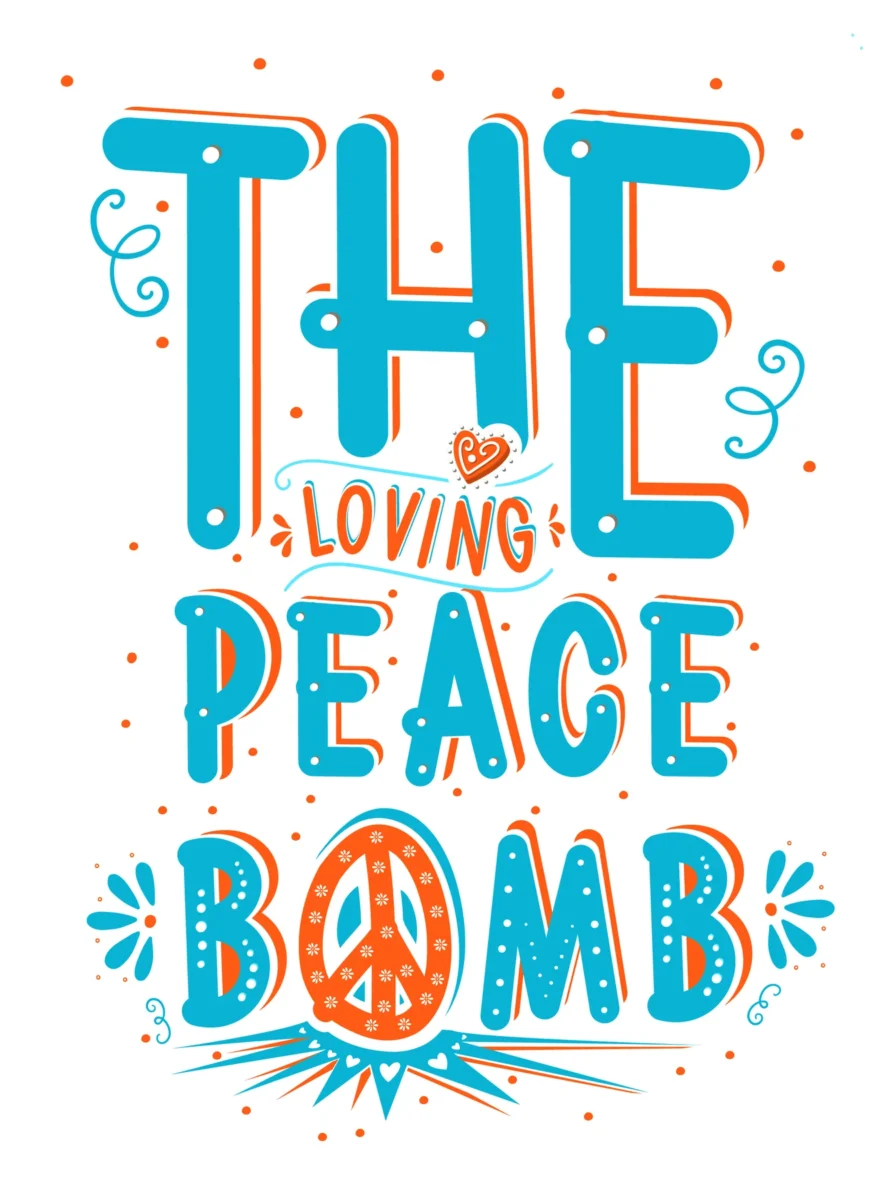
The Loving Peace Bomb. A sign for peace.
An orange wordmark, a small heart and a peace sign. The 2017 collection preserves a visual idea alongside the competition graphics.
Read the story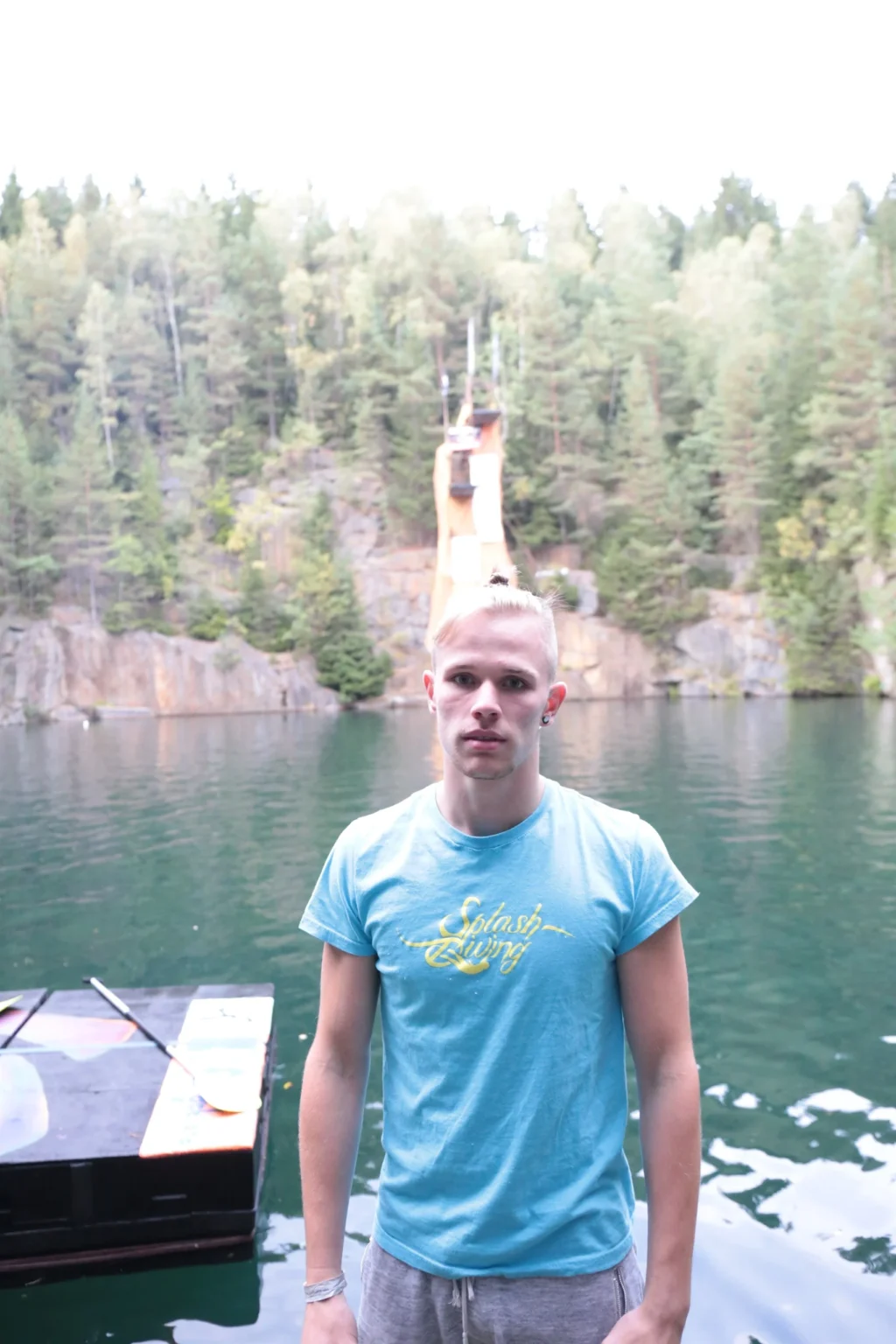
Four portraits, one September day.
A quieter view of the 2016 archive: four portraits by the water, dated 3 September. A separate photo story, not an extension of the world championship results.
Splashdiving · Photo archive ↗
Read the story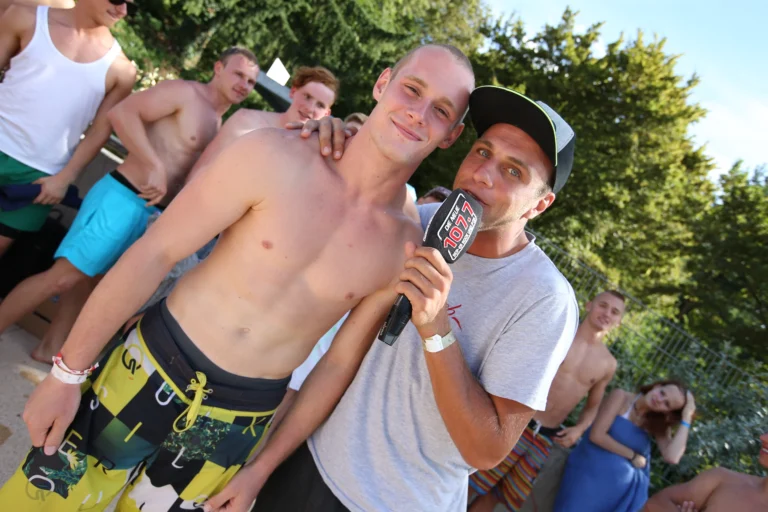
Between the dives.
An arm around a shoulder. A hand meeting another hand. A microphone, medals and people standing together. The poolside has its own stories.
Read the story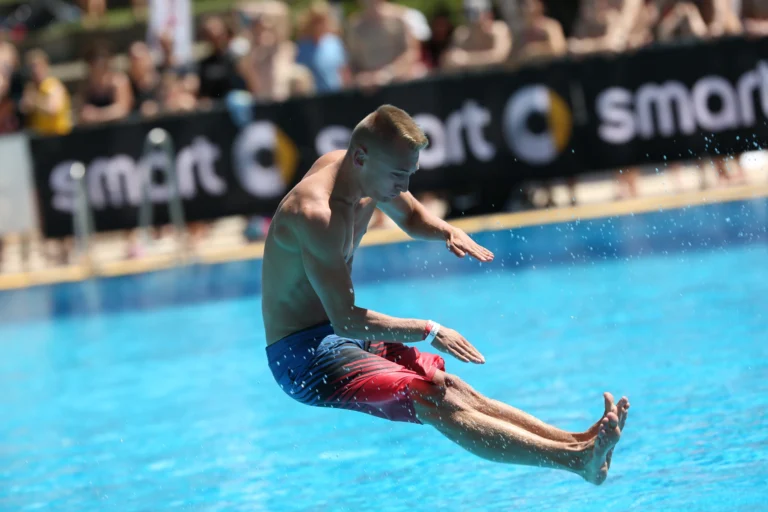
Sindelfingen. Above and below the surface.
Two bodies in the air, a diver beneath the surface and the instant of coming back up. The 2016 originals bring different parts of a dive into view.
Medienbericht · KURIER · 30.07.2016 ↗
Read story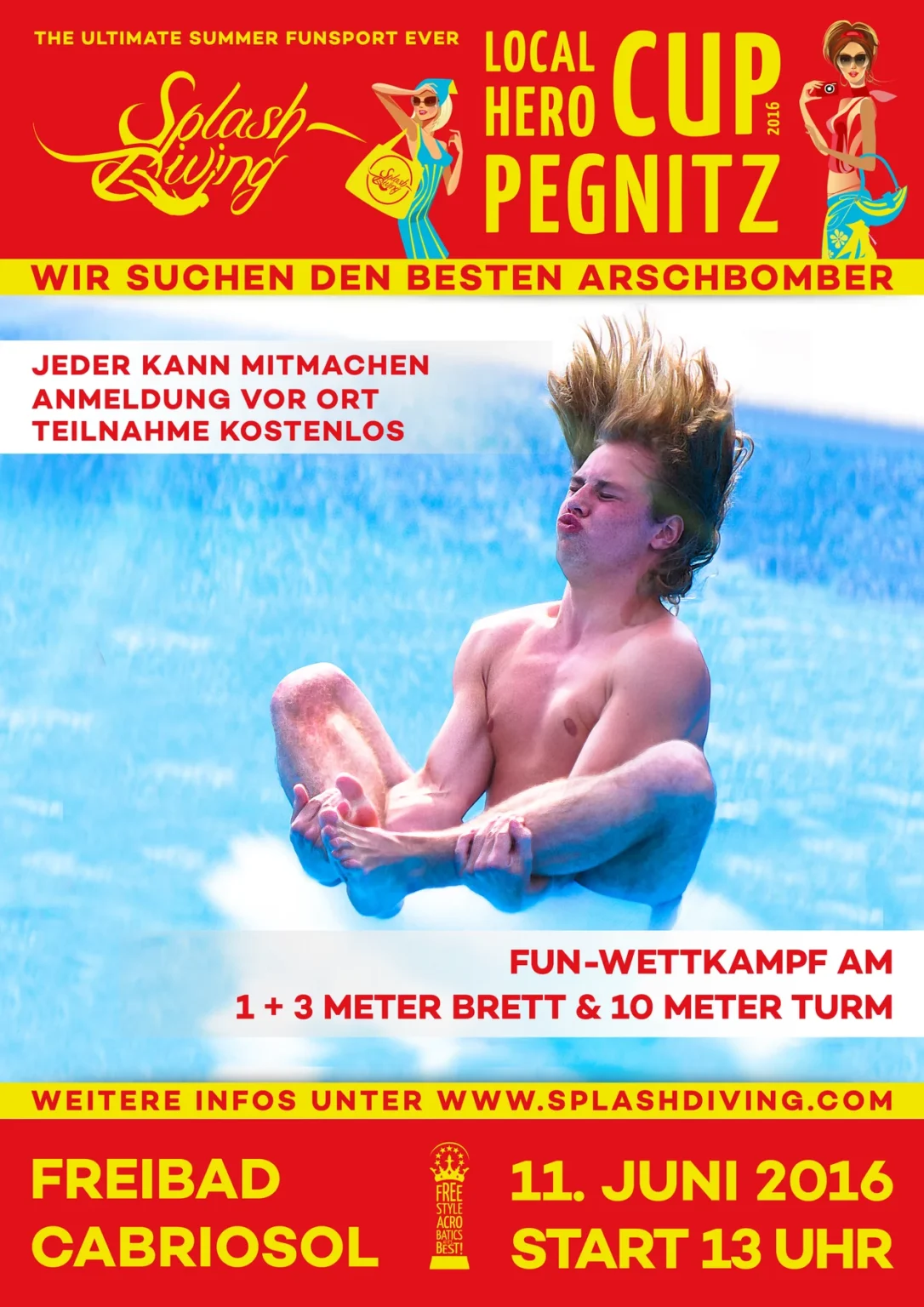
Pegnitz. A place to begin.
The Local Hero Cup announcement brings beginners and experienced divers into the same public pool. A local invitation from June 2016.
Regionale Veranstaltungsvorschau · Der Neue Wiesentbote · 02.06.2016 ↗
Read story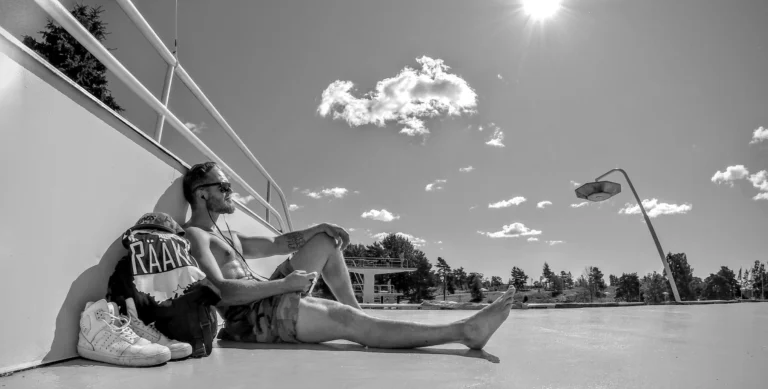
There is more to a summer than diving.
A pause in the sunshine and three direct looks at the camera. Four photographs make room for people, not just performances.
Read the story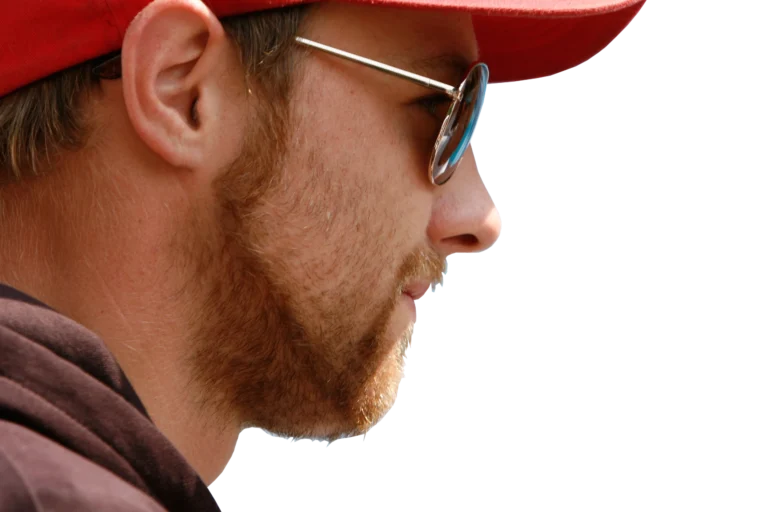
Elvis. The Splashdiving dad.
In June 2015, Christian “Elvis” Guth talks about training, belonging and finding his place beyond ever-greater heights.
Interview · taz · 06.06.2015 ↗
Read story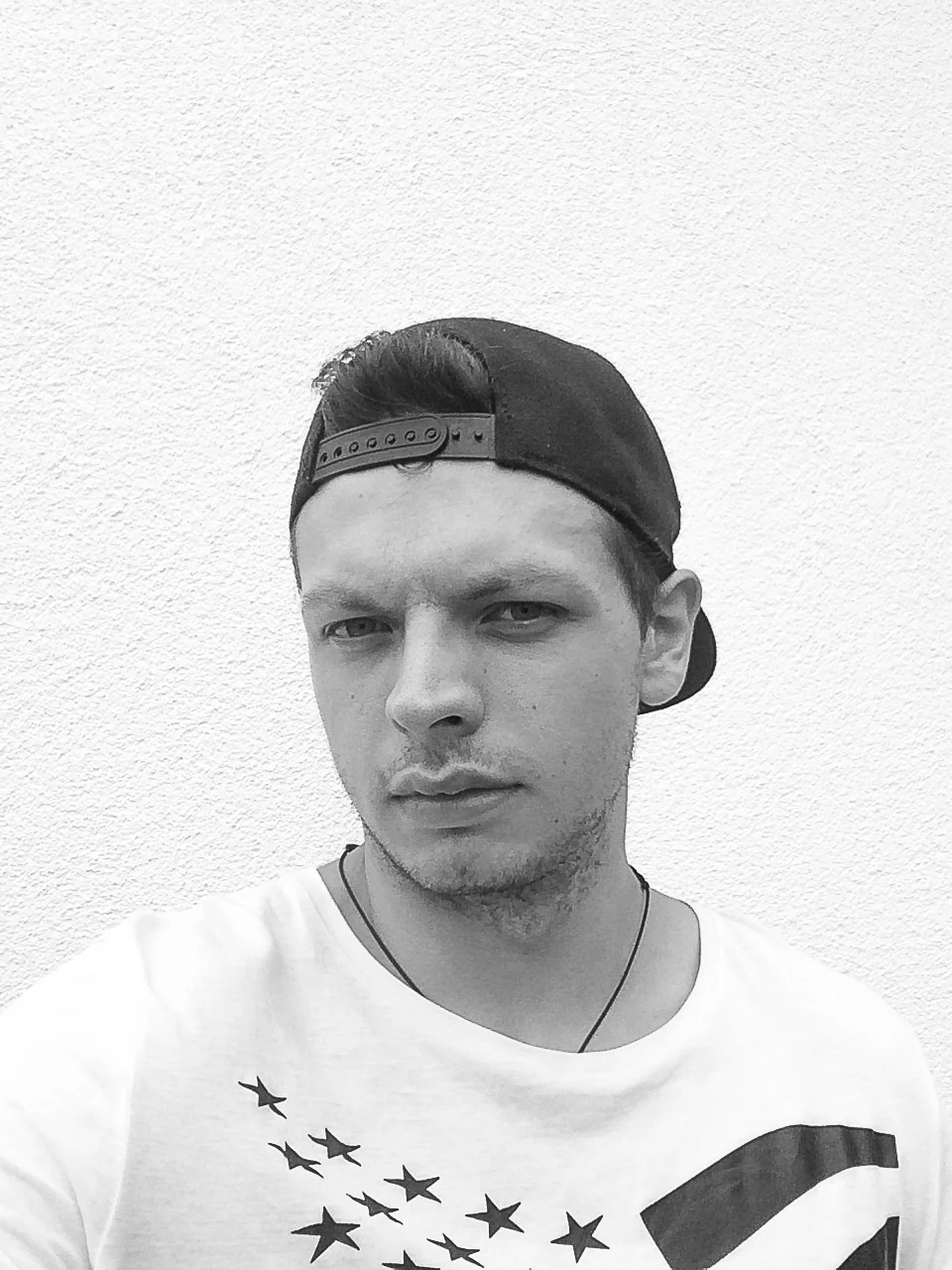
Something to keep.
The 2015 materials look beyond the live event: announcing it, recording it and making the story available afterwards. The crew archive adds faces to that work.
Read the story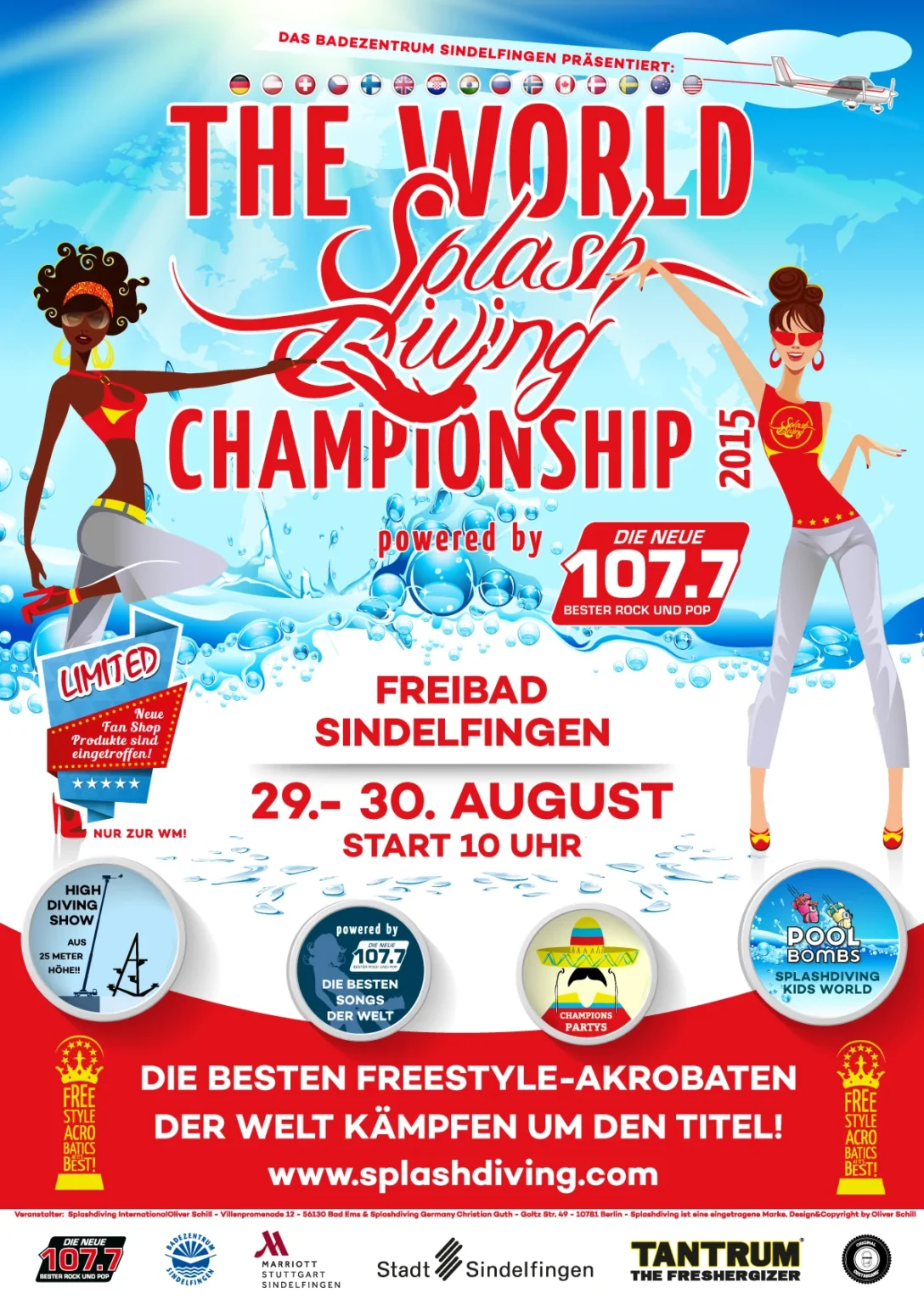
Sindelfingen. A weekend by the water.
Sunshine, an international field and a public pool hosting the championship. The contemporary report captures the start of the August weekend.
Read story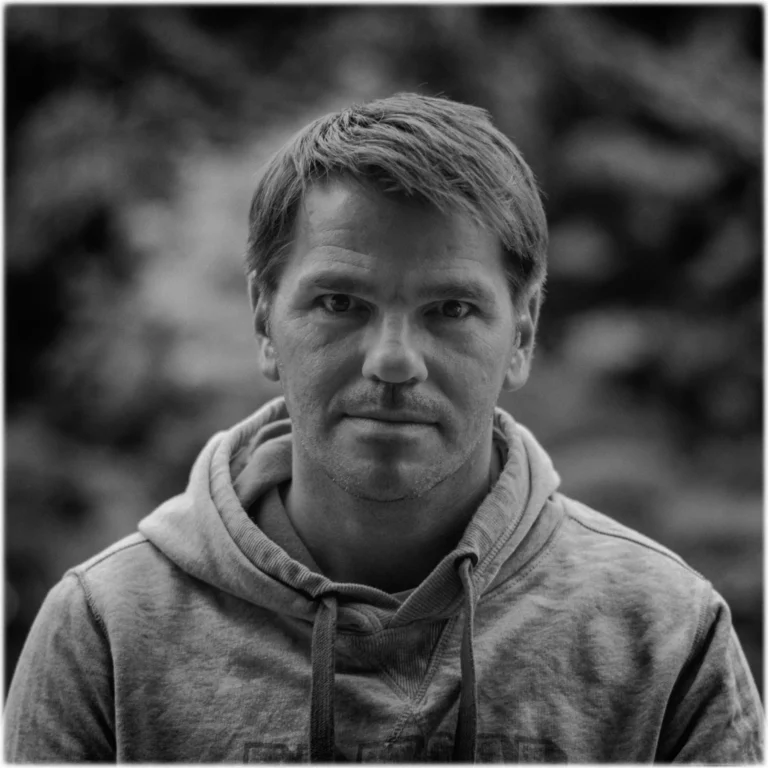
BeSomeBody. Giving an idea a face.
A portrait, a blue wordmark and a tour proposal for the following summer. The 2014 archive also records the work behind the public appearance.
Read the story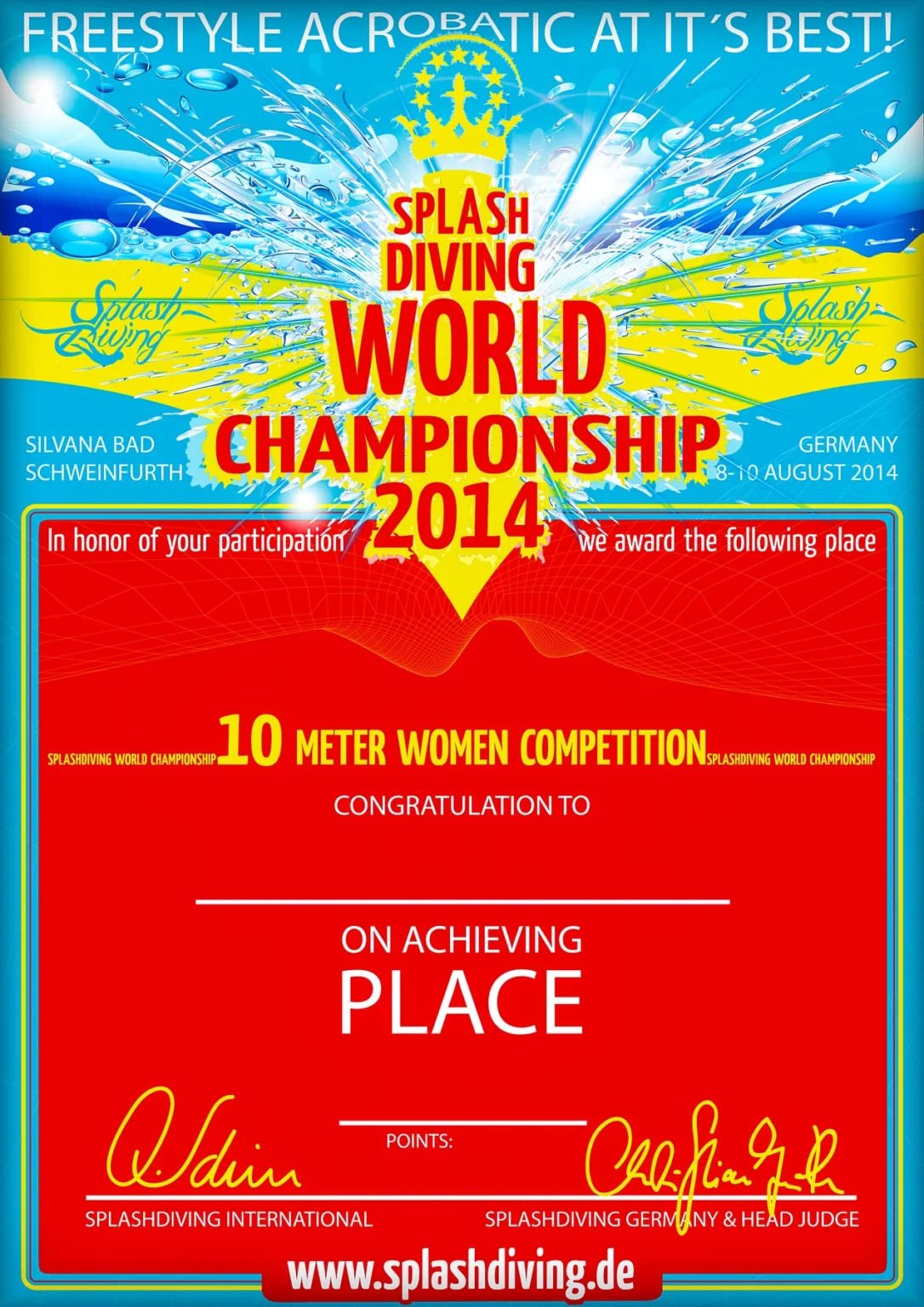
Schweinfurt. Even a unicorn takes a dive.
A championship at Silvana, an unexpected mask and an original certificate template. Three different traces of the same summer weekend.
Read the storyHighjump. The quarry becomes a grandstand.
At Hřiměždice, the audience watched from the water and the shore. A contemporary television report also records a Splashdiving exhibition.
Read storyElvis. More than a moment in the air.
In a 2014 interview, Christian “Elvis” Guth talks about individual style, the work around the sport and the less spectacular part of a season.
Interview · VICE Tschechien · 03.07.2014 ↗
Read story
Berlin. Two titles for Malte.
Two titles for Malte Kruse, and Elvis presenting from a one-metre board: the documented Berlin championship weekend.
Read story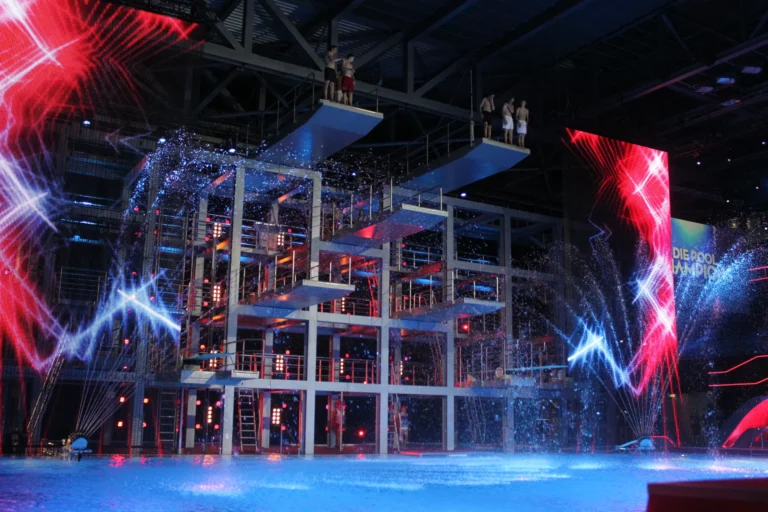
When the pool becomes a stage.
Original photographs of a television stage, a training room and people at the poolside. A separate 2013 photo essay.
Original photo archive · camera dates 2013 ↗
Read the story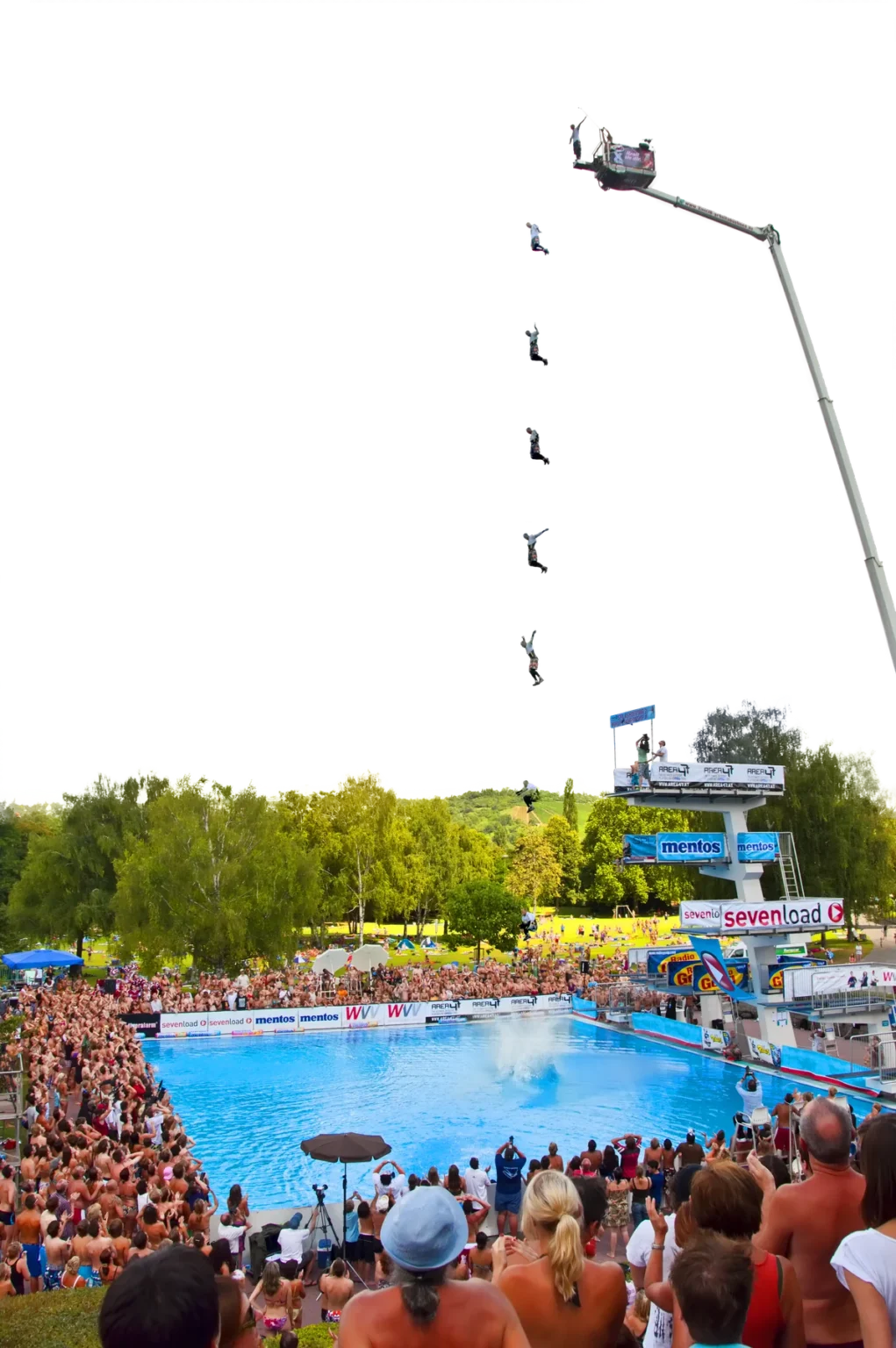
A dive becomes an image.
A motion montage, red lettering and an unmistakable silhouette: original design documents from the 2012 archive.
Original presentation and design archive ↗
Read the story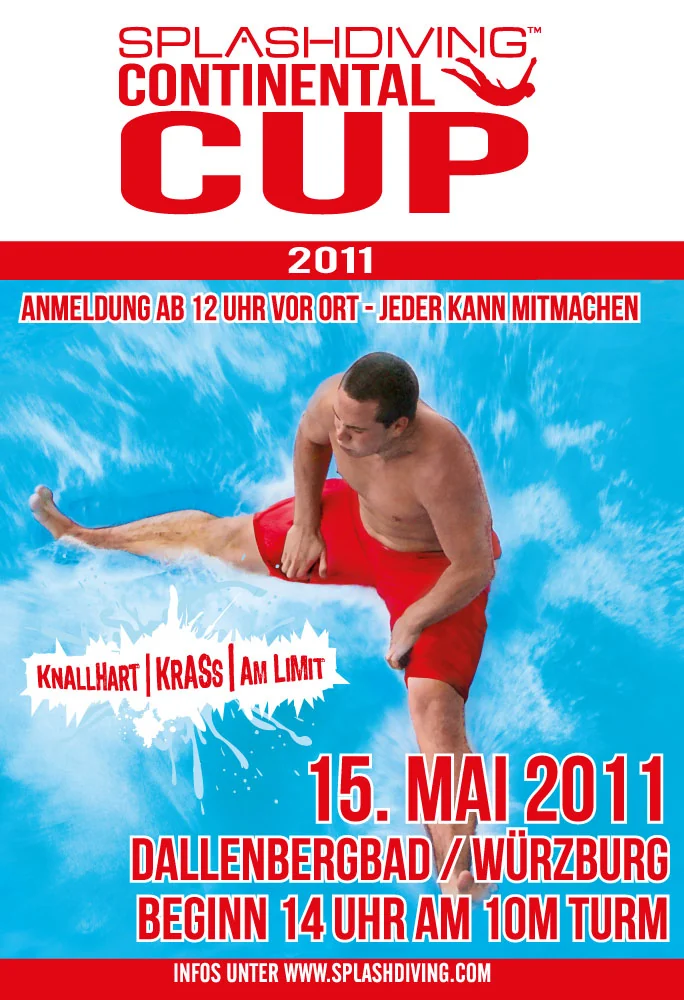
Würzburg. Japan comes to the pool.
Visitors from Japan, synchronised brothers and two original posters: a source-led look at Splashdiving in 2011.
Read story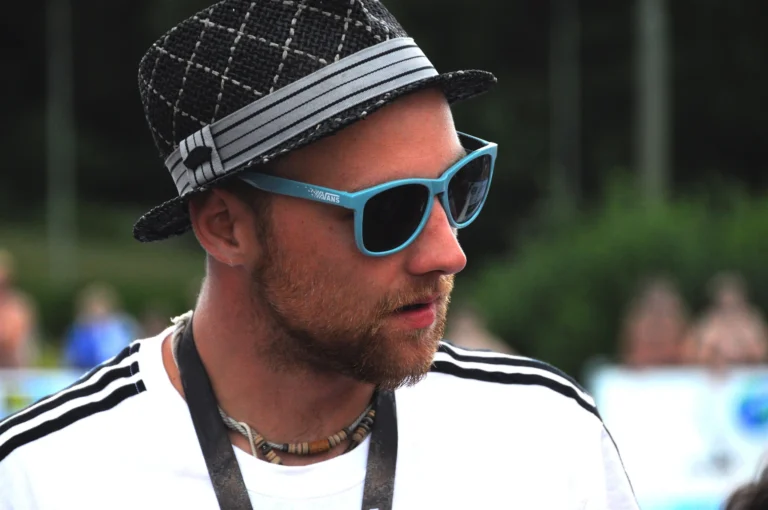
Looking upwards.
A hat and sunglasses close up. Then the view opens onto an outdoor pool full of people. These July 2010 photographs move between personal closeness and the wider scene.
Splashdiving · Photo archive ↗
Read the story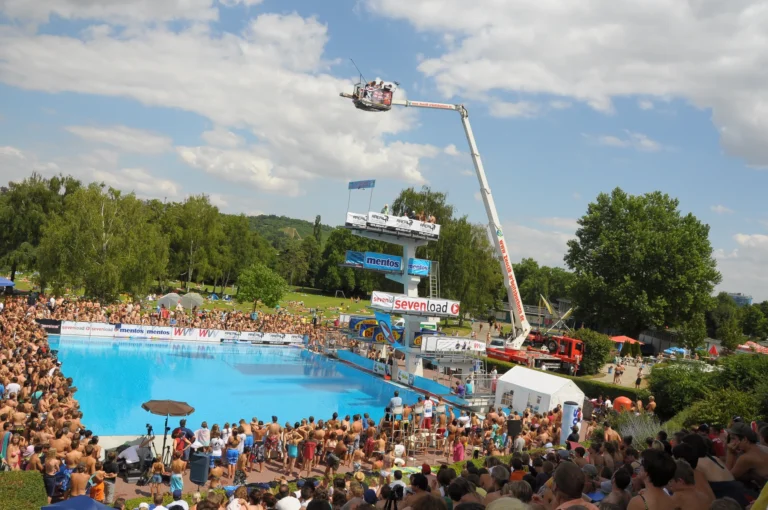
Würzburg. A summer with people in it.
Würzburg 2010: original photographs of synchronised movement, a crowded pool and the encounters around the championship.
Sportreportage / WM-Vorschau · netzathleten · 08.06.2010 ↗
Read story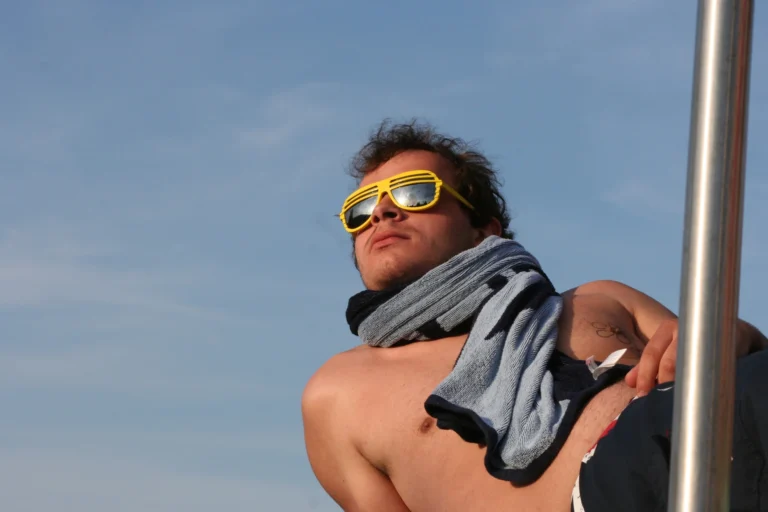
Four finds from beside the pool.
Sometimes four pictures are enough to bring a summer closer: yellow glasses, bright red, a banner held between people and a surface that is no longer still.
Splashdiving · Photo archive ↗
Read the story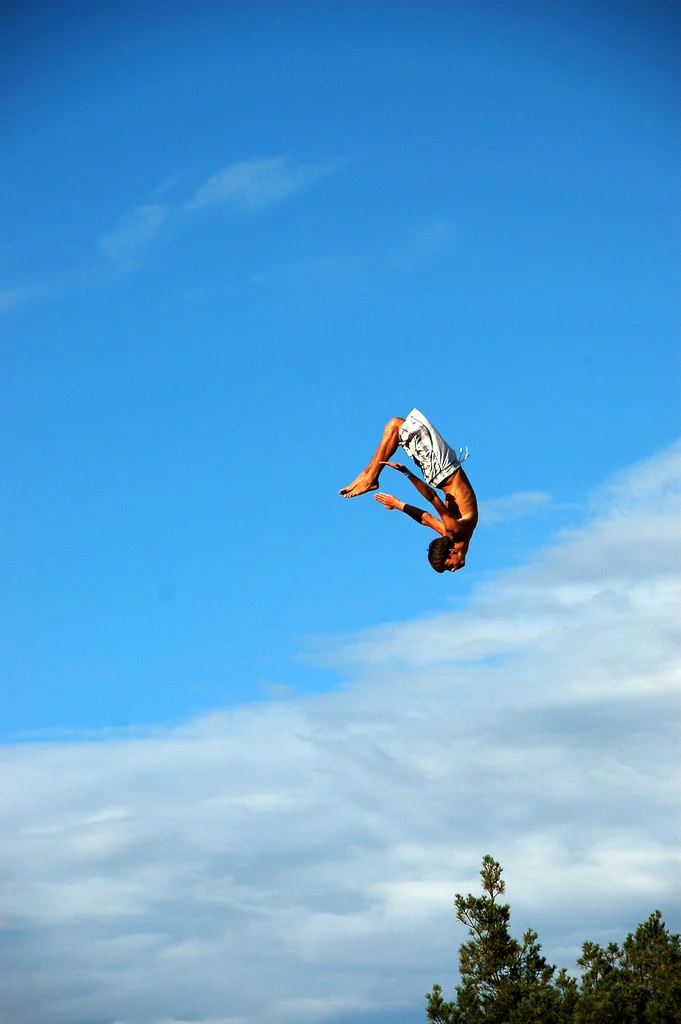
Essen. A new generation lands.
Felix Hirt and Elvis: rivals in singles, partners in synchro. Original programme material opens the story of Essen 2009.
Historischer Ergebnisbericht · openPR · 18.08.2009 ↗
Read story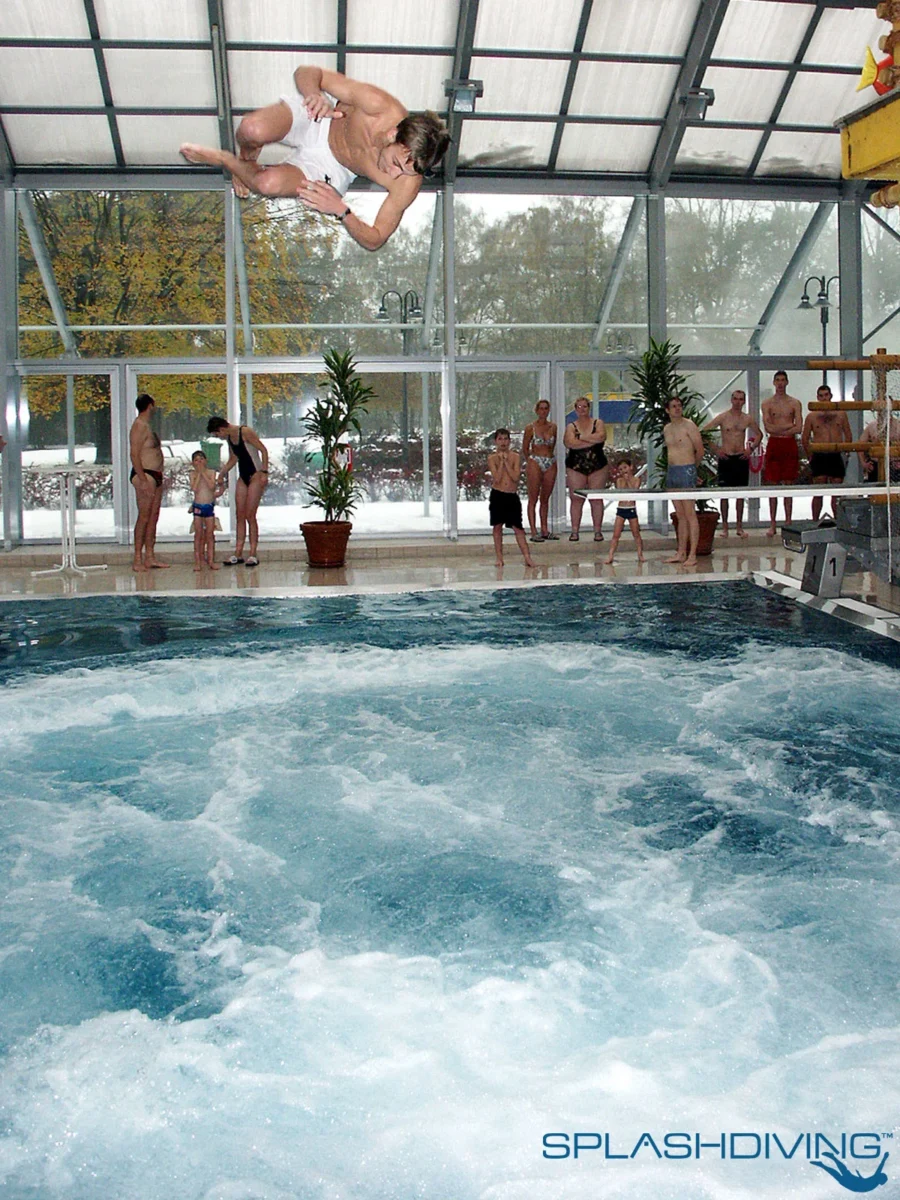
An outdoor-pool feeling enters the classroom.
A teaching-journal contribution from 2009, with an archive sports image kept distinct from school lessons.
Peter Neumann · Lehrhilfen für den Sportunterricht · Heft 8/2009 ↗
Read story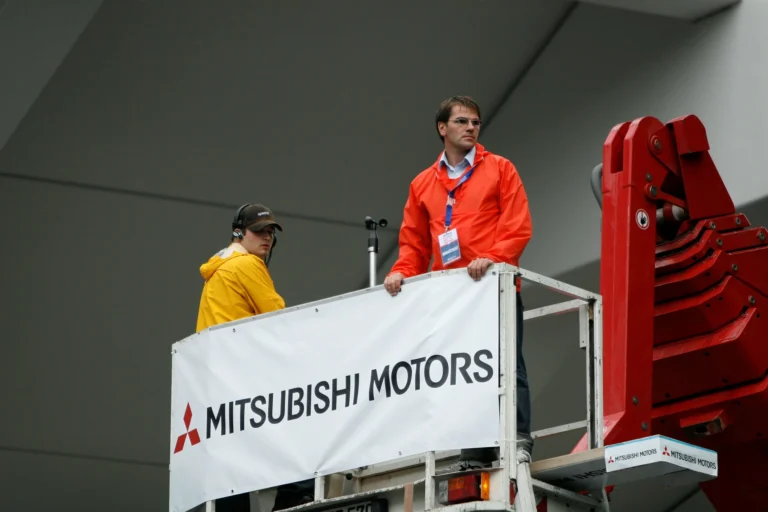
A summer seen from many angles.
Watch only the tower and you miss part of the story. In the 2008 archive, the view moves to the scoring board, the camera and the group photograph, then back above the water.
Splashdiving · Photo archive ↗
Read the story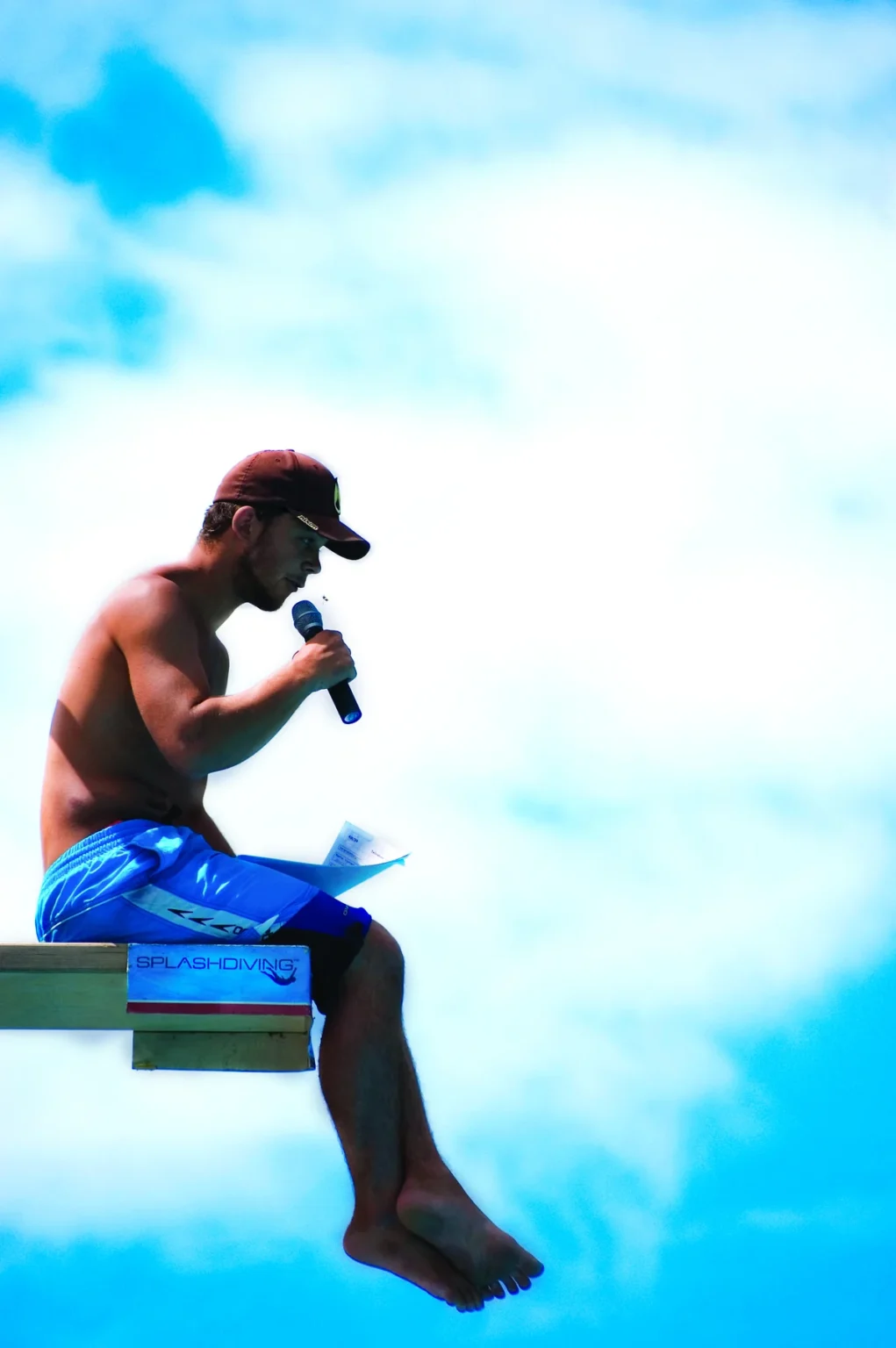
One summer. Twelve outdoor pools.
Geislingen, Frankfurt and the people around the pool: original photographs and programme documents open the summer of 2008.
Historischer Saisonrückblick · openPR · 11.09.2008 ↗
Read story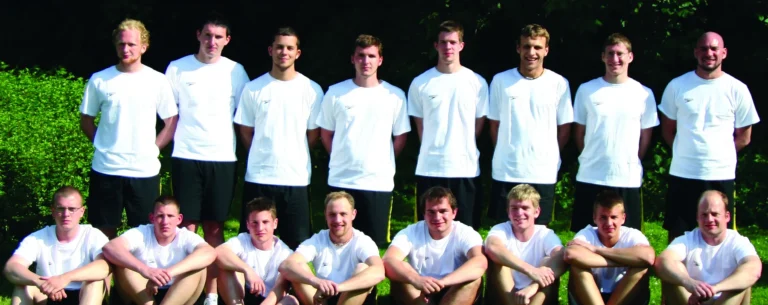
Freiburg: nine places on the national team
Nine places in Freiburg. Original photographs from Kulmbach and Vienna add the wider Round Robin story of 2008.
Archivierte Pressemitteilung · 18.03.2008 ↗ ↗
Read story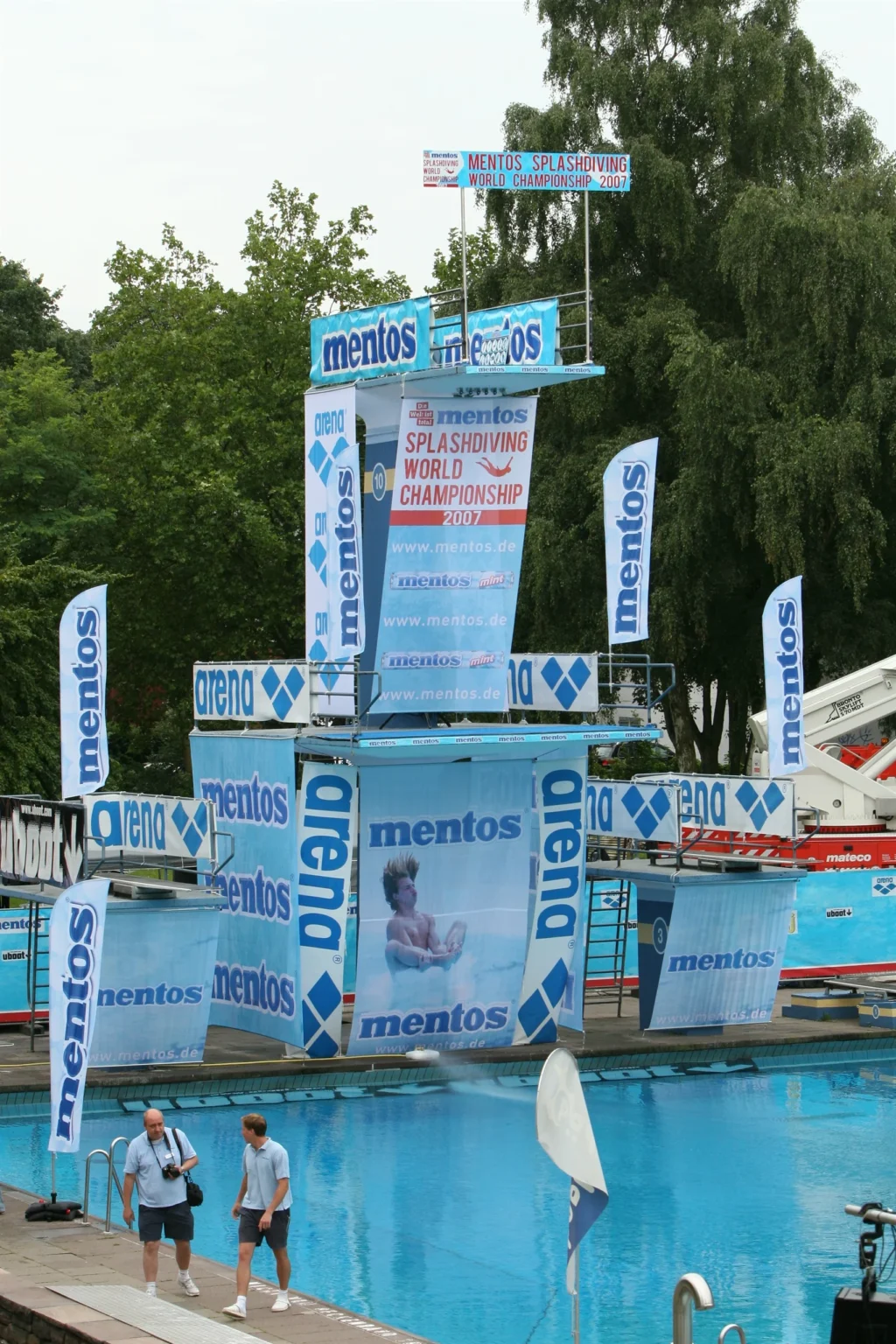
More than the dive stays with us.
A tower, a camera crew, yellow jerseys beside the pool. These July 2007 photographs make room for what happens before and after a dive, too.
Splashdiving · Photo archive ↗
Read the story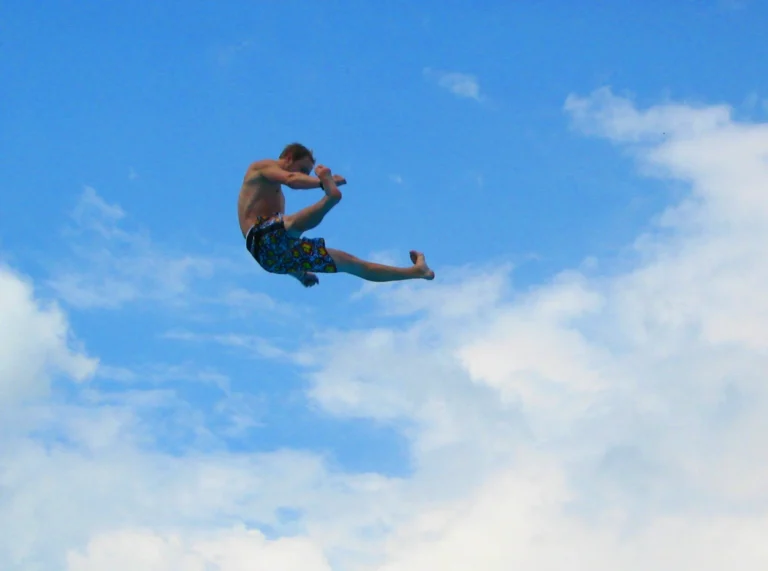
Hamburg. Three seconds and a whole world.
Hamburg 2007: international teams, Christian “Elvis” Guth and the work around the water. Programme photographs and original planning documents open the archive.
Reportage · taz · 30.07.2007 ↗
Read story
Pool Bombs. Summer reaches television.
A blue splash, a shared effort and a television appearance: the original 2007 Pool Bombs artwork meets the contemporary organiser report.
Historische Veranstalter-Pressemitteilung · Targetwire · Archivpfad 04.06.2007 ↗
Read story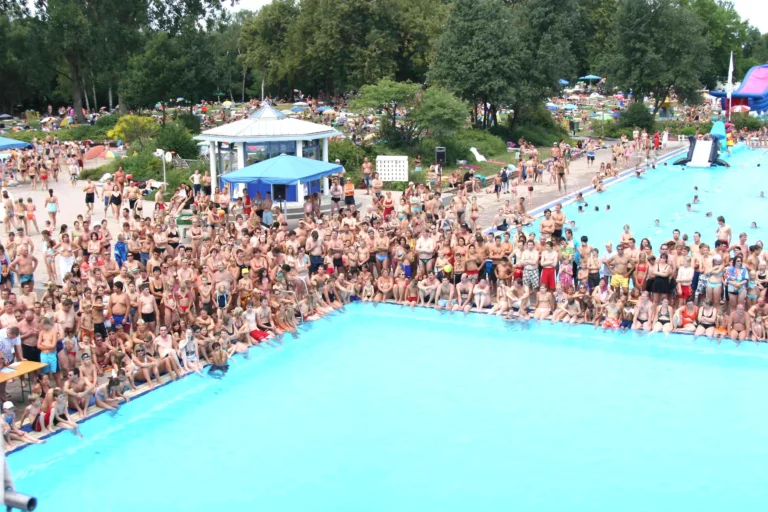
The outdoor pool becomes a meeting place.
Above the water, everything is still for an instant. Beside the pool, it is another story: people crowd together, cameras point upwards, someone waits for their next dive. The summer of 2006 left many pictures like these.
Splashdiving · Photo archive ↗
Read the storyDillingen: a new name for the splash
The Dillingen championship marks the move from the German word “Arschbombe” to the international name Splashdiving.
Read storySwitzerland joins the story.
Summer 2006. SRF visits the Swiss national team training at Thun’s lakeside pool and features the reigning world champion from Münsingen.
SRF · Schweiz aktuell · 26.06.2006 ↗
Read story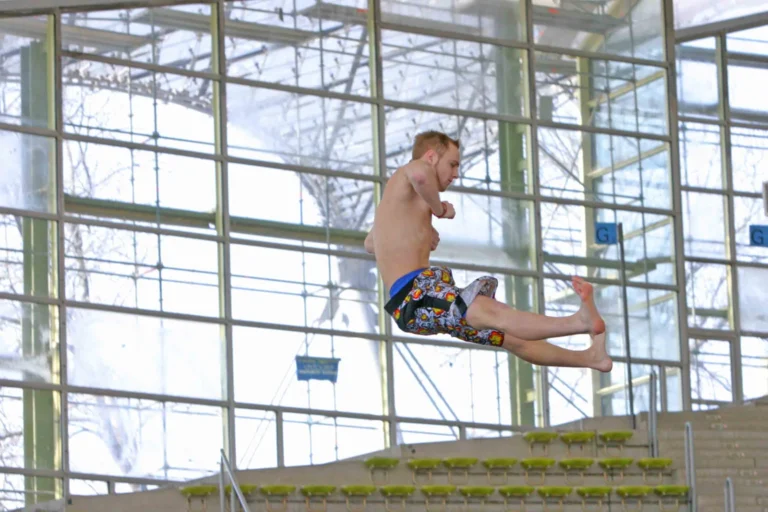
Munich. An idea finds its stage.
Sixteen original photographs from Munich, March 2006: the national teams, individual styles and the people beside the water. A new archive story from Arena Swim & Splash.
Historische Pressemitteilung · openPR · 20.03.2006 ↗
Read storyHeilbronn. A Swiss athlete takes the title.
Simon Gfeller wins the 2005 cannonball world championship. Behind the result is a bigger change: the early German team is now part of an international competition.
Zeitgenössischer Ergebnisbericht · funsporting · WM 2005 ↗
Read story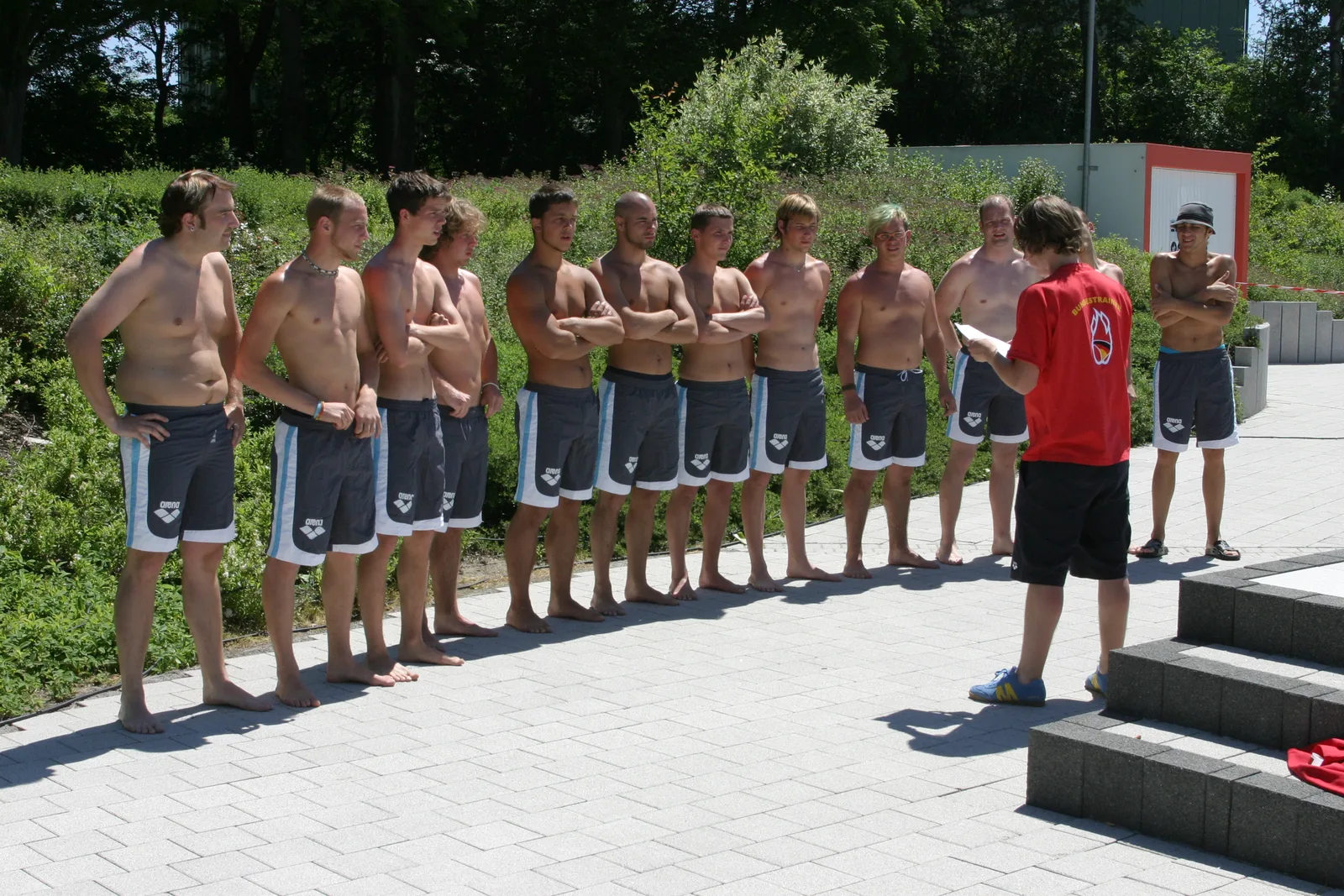
The first Arschbombe national team
A team on the tower. A pool full of people. And between them, that brief moment in the air where courage becomes skill. These original photographs from 2005 tell the story of a sport then known as Arschbombe.
Read storyBefore the world watches. The team trains.
An August 2004 dpa report catches the first national team in preparation, with coach Florian Spiske and an idea becoming more than a poolside joke.
Zeitgenössischer dpa-Bericht · Mitteldeutsche Zeitung · 10.08.2004 ↗
Read storyArschbombe. Die Weltmeisterschaft
A familiar jump becomes an event format. “Arschbombe. Die Weltmeisterschaft” (“The Cannonball: The World Championship”) is an early chapter on the road to Splashdiving.
Read storyBefore the name Splashdiving
Bayreuth, 2003. An early Cup becomes a starting point. Reports published in 2004 already trace the story explicitly to the previous year.
MZ/dpa · 10.08.2004 · Rückblick auf 2003 ↗
Read storyBefore it is called Splashdiving.
How a poolside idea becomes a sport. Oliver Hillebrecht recalls the people, jumps and decisions behind the original, from 2003 to 2010. Recollections recorded in 2026.
Read the origin storyAn archive with memory.
This collection is growing. Historical retrospectives are labelled as such; exact days, years and source dates are kept distinct. Organiser statements and independent reporting are identified, and original media stay with their publishers.
From the poolside to the world
One jump.
One world.
The story begins with the Pecklamen Cup in 2003, followed by “Arschbombe. Die Weltmeisterschaft.” in 2004. What thrills people at the poolside soon travels as television footage. An event in Germany becomes a story reaching newsrooms, sports programmes and broadcasters around the globe.
Reach figures: Oliver Hillebrecht, retrospective account in 2026. TV contacts do not represent unique viewers. The workbook does not establish the measurement method, comparability of annual figures or the year of the one-billion milestone.
Splashdiving TV distribution report / 2007/2008
The footage travels.
Oliver Hillebrecht commissions Quattro Media, and the footage travels the world.
The world map shows the Splashdiving World Championship TV footage actually accepted by recipients.
1,095 regional entries marked “OK”, including repeats. In addition: 20 worldwide SNTV satellite-feed entries. The map represents historical report classifications, not 141 independent states or 1,095 distinct broadcasters.
Read the story behind the connections & sources
Oliver Hillebrecht recalls that, from 2007, a roughly three-minute World Championship roughcut and a 30-second teaser were distributed internationally in cooperation with Quattro Media. He reports feedback indicating roughly 95 percent usage. This is the founder’s account, not a rate calculated from this workbook.
According to Hillebrecht, this international work continued in 2008, 2009 and 2010. Over the years, distributing footage led to relationships with newsrooms and broadcasters. The surviving workbook reveals part of that network: channels, sports programmes, news and repeat transmissions.
Document: “Quattro-Media-WM-Metadaten.xls”, Cover Sheet A1:A2: “Report TV Exposure: 28.08.2008” and “Splashdiving World Championship 2008”. The 2007/2008 heading refers to the historical distribution period as described by Oliver Hillebrecht. The recipient data currently displayed comes from the available 2008 report; a separate 2007 report is not yet included. SNTV rows include March dates and other fields refer to week 17/2008. These are retained as recorded; their relationship to the championship requires clarification.
Only regional broadcaster/programme rows marked “OK” are shown. “OK” is reproduced as a report status, not as independently verified broadcast footage. General network footprints in the appendices are not treated as additional transmissions. Related rows are grouped, with exact workbook references for every entry.
Historical combined labels and separately listed territories are retained. Pins use representative country coordinates, with a combined reference point for North/South Korea and Serbia/Montenegro. They do not locate actual receivers or studios.
Map geometry: Natural Earth / world-atlas. Territory coordinates: Countries dataset (mledoze). Additional reference points: Las Palmas, Dubai.
It began with a Cup. Then came images that stayed.