2010 · Würzburg. Ein Sommer voller Menschen.

2010 · Der Blick geht nach oben.

Archive story · 2010
Würzburg. A summer with people in it.
Two divers in the sky. A signature on an arm. A whole pool watching. Original photographs open the view beyond the championship announcement.
First a date. Then a place full of people..
On 8 June 2010, Netzathleten looked ahead to the championship on 17–18 July at Würzburg’s Dallenbergbad. The report described singles and synchronised competitions for women and men. It was an announcement, not a report of completed results. Maria Poursaiadi · Netzathleten · 8 June 2010 ↗
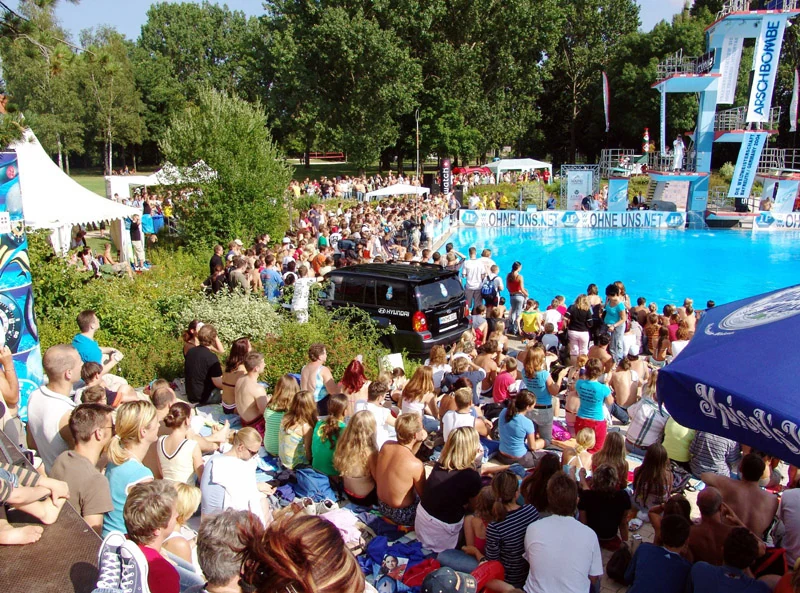
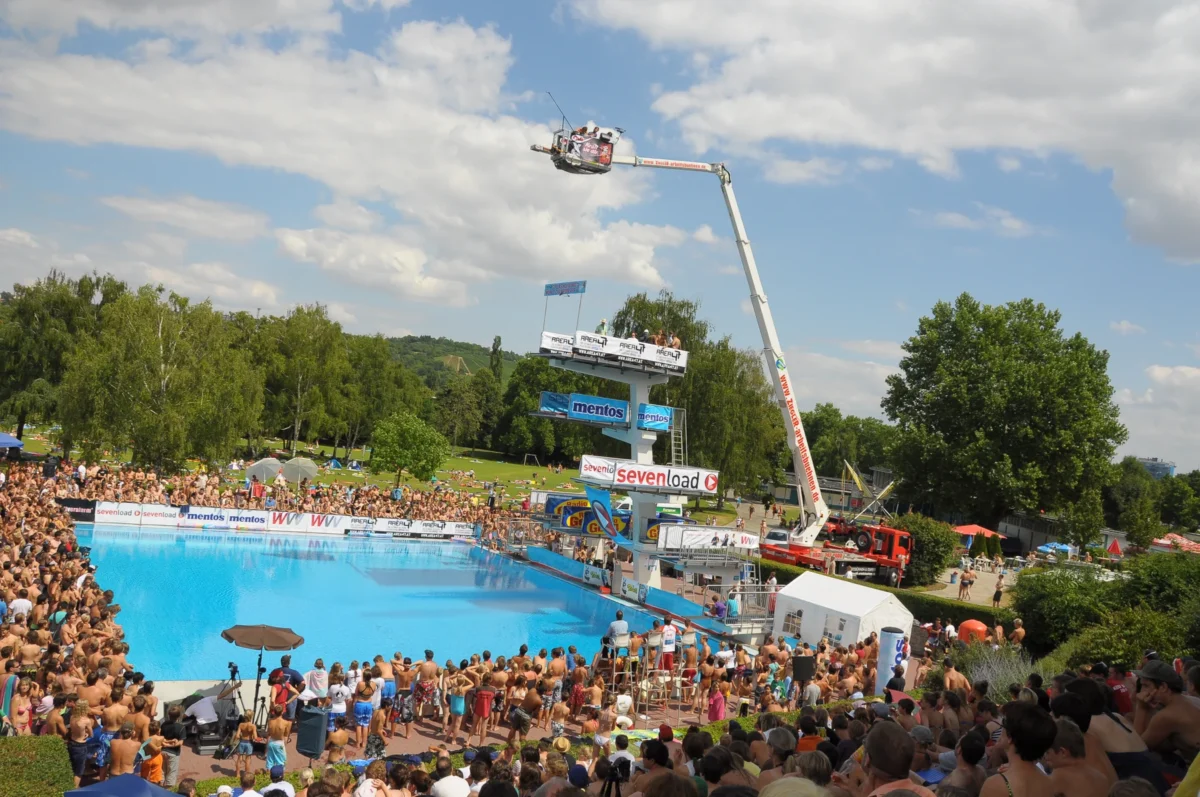
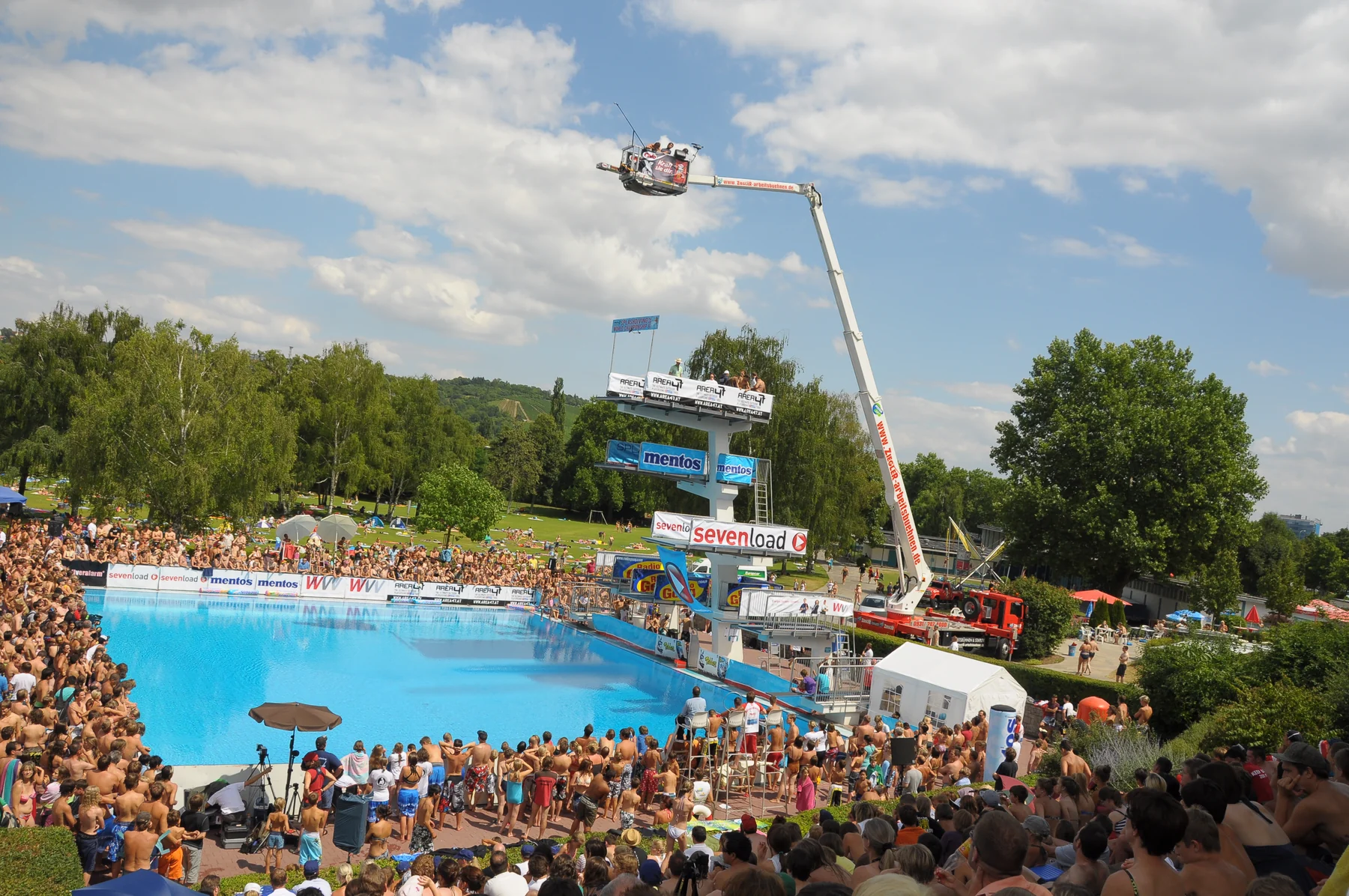
The archive gives the summer another scale. In the July photograph, people surround the blue pool. The diving tower rises in the middle, a raised work platform beyond it. This is no longer just a date on a programme. It is a place filled with people.
Two movements, one frame.
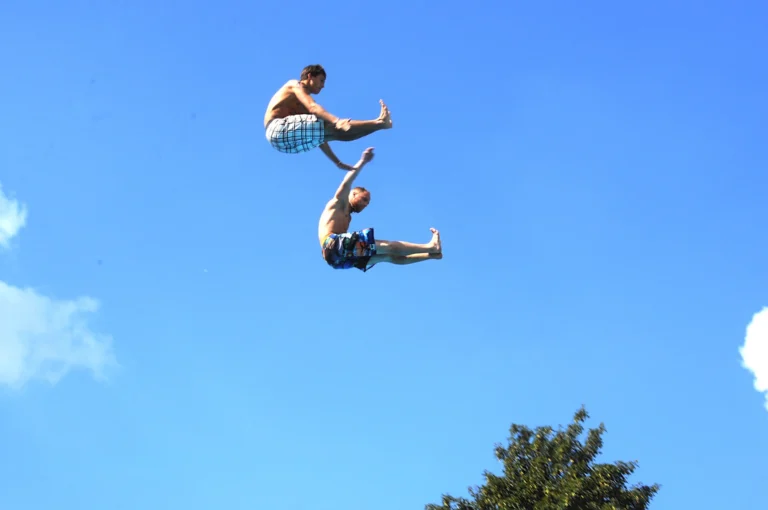
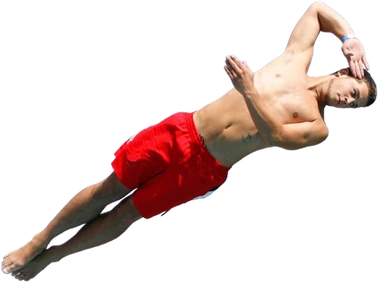
Two divers share the sky. Both have drawn their legs up; there is open blue around their bodies and the treetops stay low in the picture. Nothing in this frame tells us their names or their score. It gives us something more direct: two movements held together for a fraction of a second.
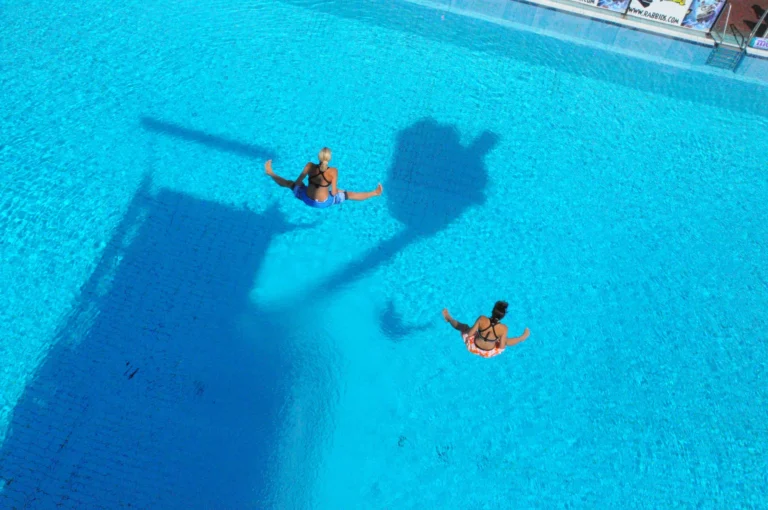
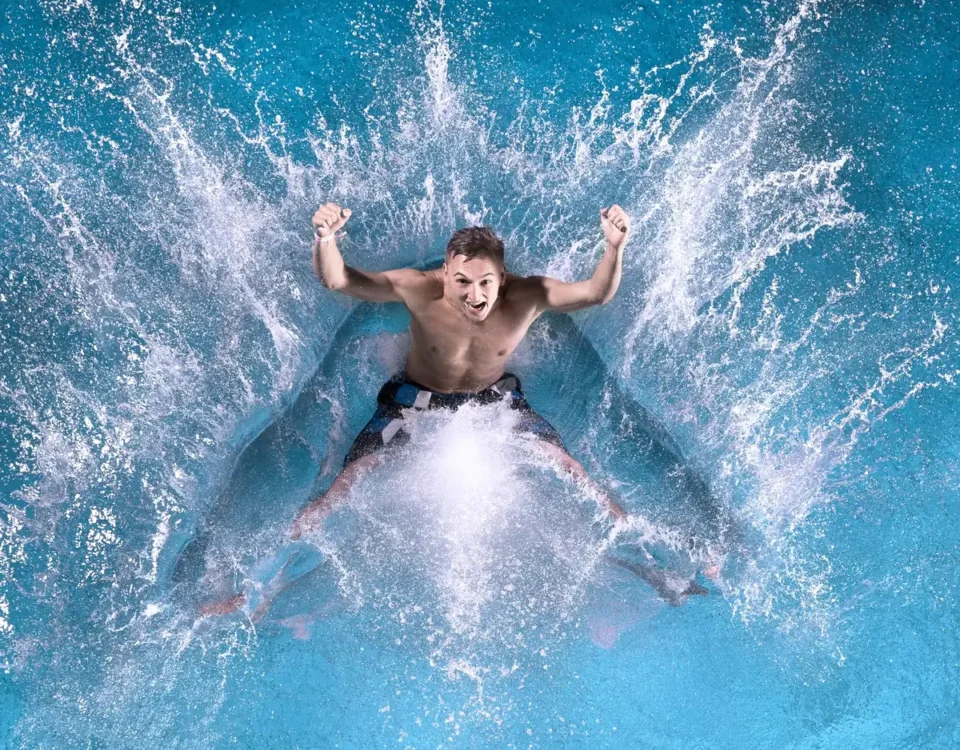
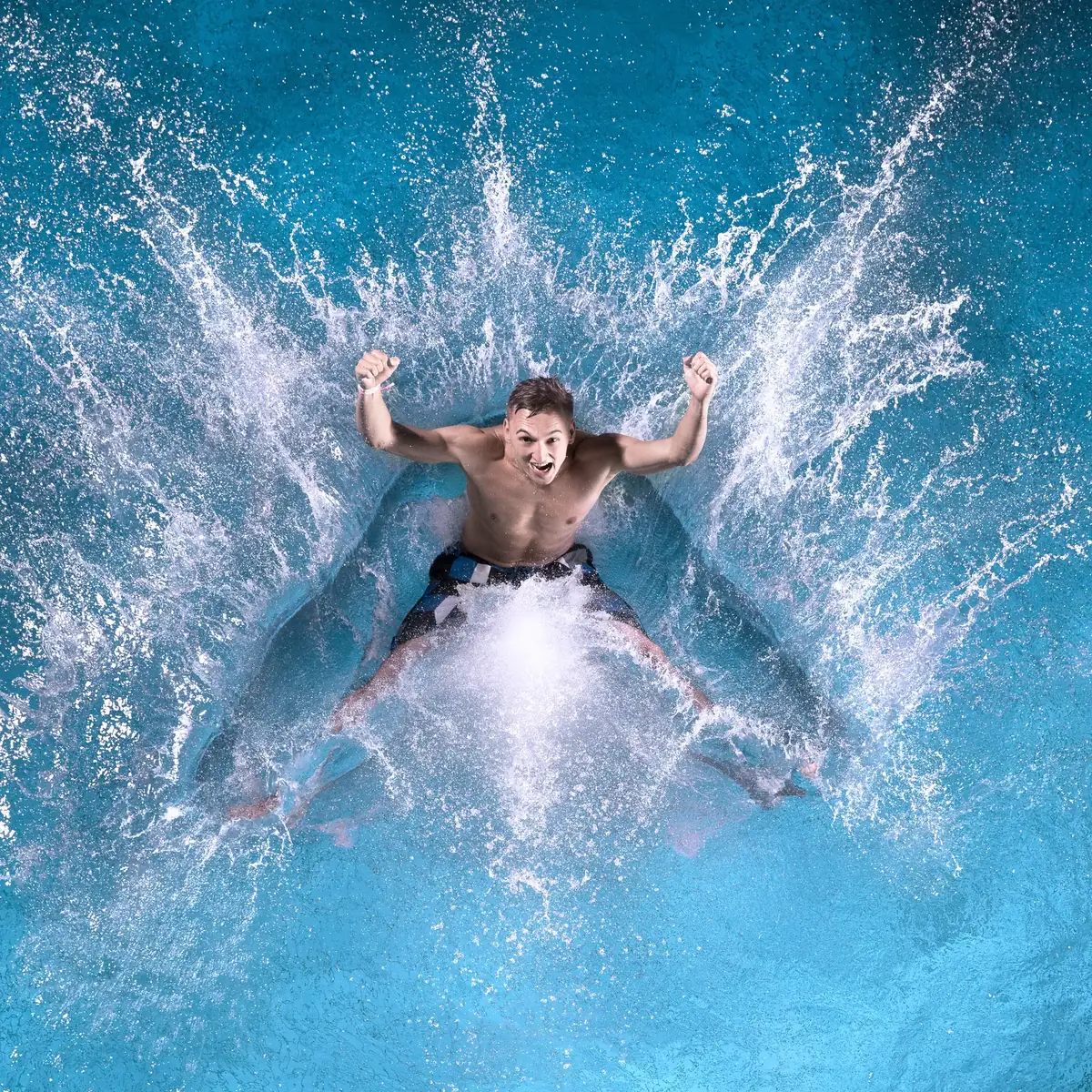
Another view looks down toward the water. The divers are small beside the tower’s dark shadow. The change of angle makes the surroundings part of the photograph, rather than cutting them away. The event can be seen from the stands, from below the tower and from above the water, without becoming a different sport.
A signature fits on an arm.
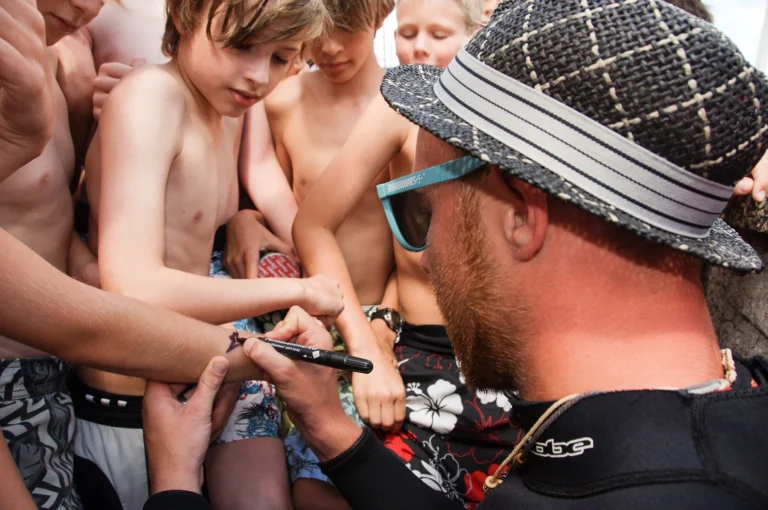
The camera is close enough to show the black marker in a hand. A child holds out an arm; the children beside him watch the writing. The man signing wears a woven hat and turquoise sunglasses.
This is a smaller scene than a dive, but it belongs in the same summer. A public appearance can become a brief encounter, with no stage between the people involved. The photograph preserves the attention around that small patch of skin.
The people beside the water.
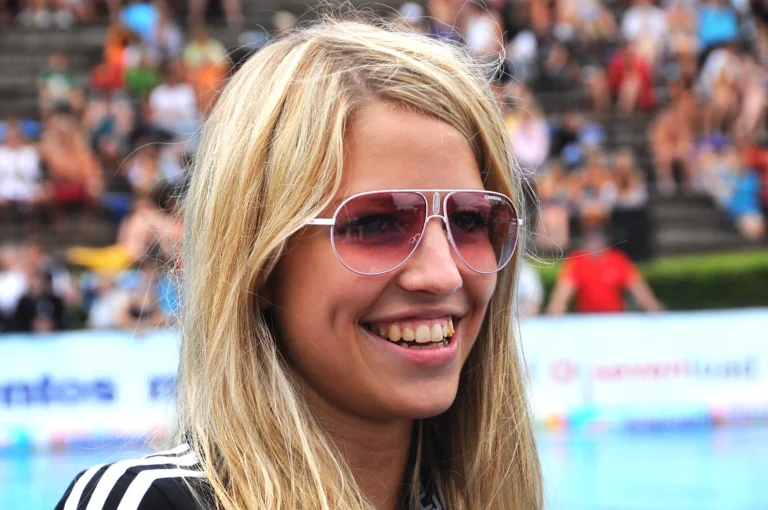
A smile and pink sunglasses fill the foreground. Behind them, the pool and the people around it are already out of focus. It is a portrait within a sports event, not a picture that needs a finishing position to earn its place.
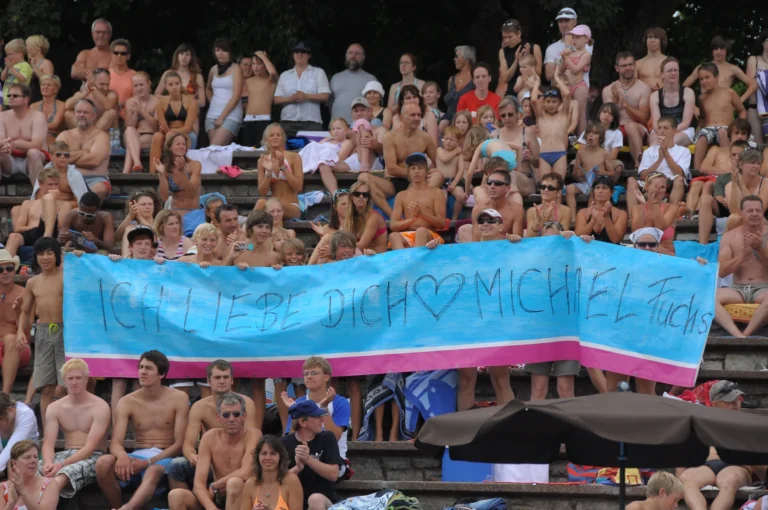
In the group photograph, a hand-painted banner runs across the front. Faces gather in several rows behind it. The lettering and the folds in the fabric remain visible. A tournament’s visual history also includes the things people brought with them, rather than only the signs prepared by its organisers.
The work around the photographs.
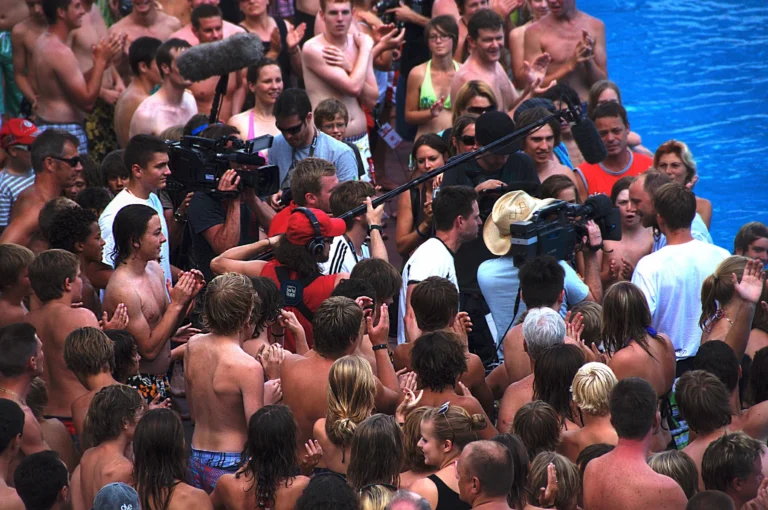
Camera operators stand among the people beside the pool. Boom microphones cross above them. Some people clap, others watch. The picture keeps the event and its recording in the same frame, rather than pretending the cameras were not there.
The surviving Welcome Guide manuscript also records the work behind the weekend. It lists Jonas Höltermann for project management, Roland Ernst for text and press, Alexandra Chromy, Marie-Theres Riedlbauer and Angelina Köhler for the tournament office, and Ron Knaub for logistics. These are credits preserved in a planning manuscript, not newly reconstructed biographies.
Its acknowledgements turn toward the many small jobs an audience rarely sees. That thought belongs beside this photograph: the sport reached people through the divers, but also through people writing, organising, recording and keeping things moving.