2009 · Essen. Eine neue Generation landet.
2009 · Vier Fundstücke vom Beckenrand.

Archive story · 2009
Essen. A new generation lands..
Felix Hirt and Elvis: rivals in singles, partners in synchro. The results, the programme and original archive images tell a story bigger than a change at the top.
The challenger already had a page.
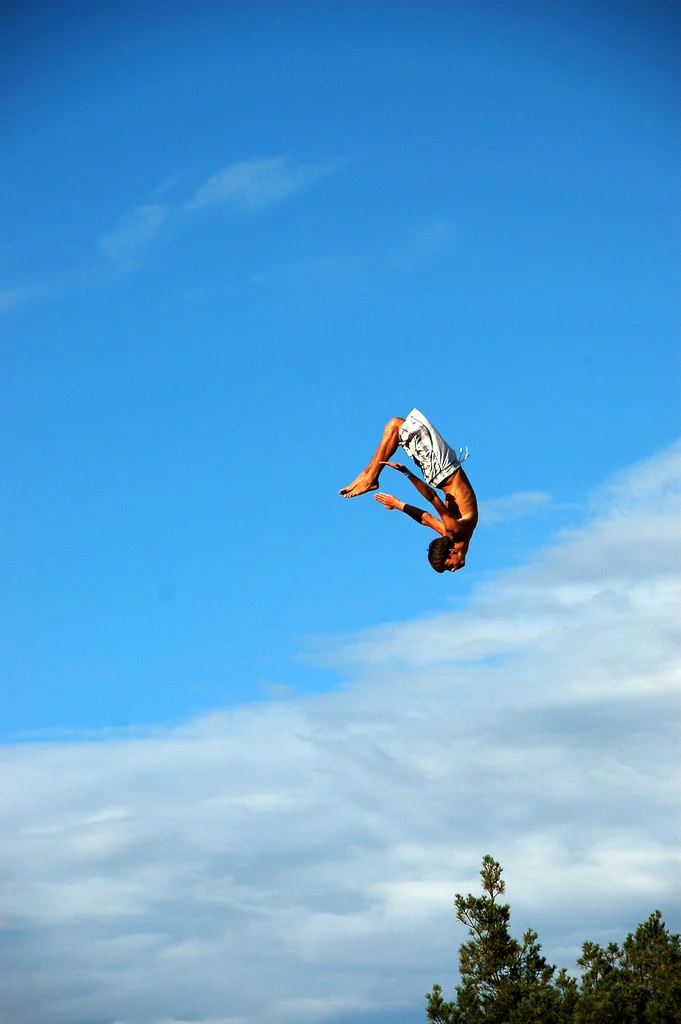
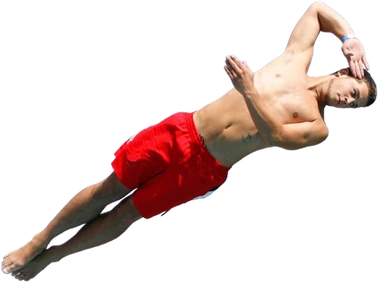
In the surviving Welcome Guide text, Felix Hirt has his own heading: the challenger. The nickname beside his name is “Feel-X”. He is not introduced as an unknown outsider. The manuscript recalls his German championship win earlier that year and his work in tricking and trampolining.
The photograph from that profile catches him against a wide blue sky. It is a programme image, not a proven frame from the world championship final. The distinction leaves the movement intact without giving it a story the file cannot support.
Opponents in singles. Partners in synchro..
The most interesting line in the manuscript is not a forecast of who will win. It is the way the relationship is described. The text says Elvis introduced Felix to Splashdiving and trained him; they would compete against each other in singles and together in the synchronised event.
“Elvis ist mein größter Konkurrent und gleichzeitig einer meiner besten Kumpels.”
The Welcome Guide text quotes Felix describing Elvis as his biggest rival and one of his best friends. It is a quotation preserved in the programme manuscript, not a newly conducted interview.
The results release later names Felix Hirt as the singles winner, ahead of Marcel Ledwon and Lukas Elvermann, with Christian “Elvis” Guth fourth. In men’s synchro, Felix and Elvis won together. Contemporary results release · openPR ↗ Two different results, one continuing partnership.
More than one winning story.
The same report names Jenny Netsch as women’s singles winner, ahead of Sarah Hidlmayer. Contemporary results release · openPR ↗ Their names belong in this retrospective as clearly as the men’s. A history of the sport becomes narrower when it remembers only one rivalry.
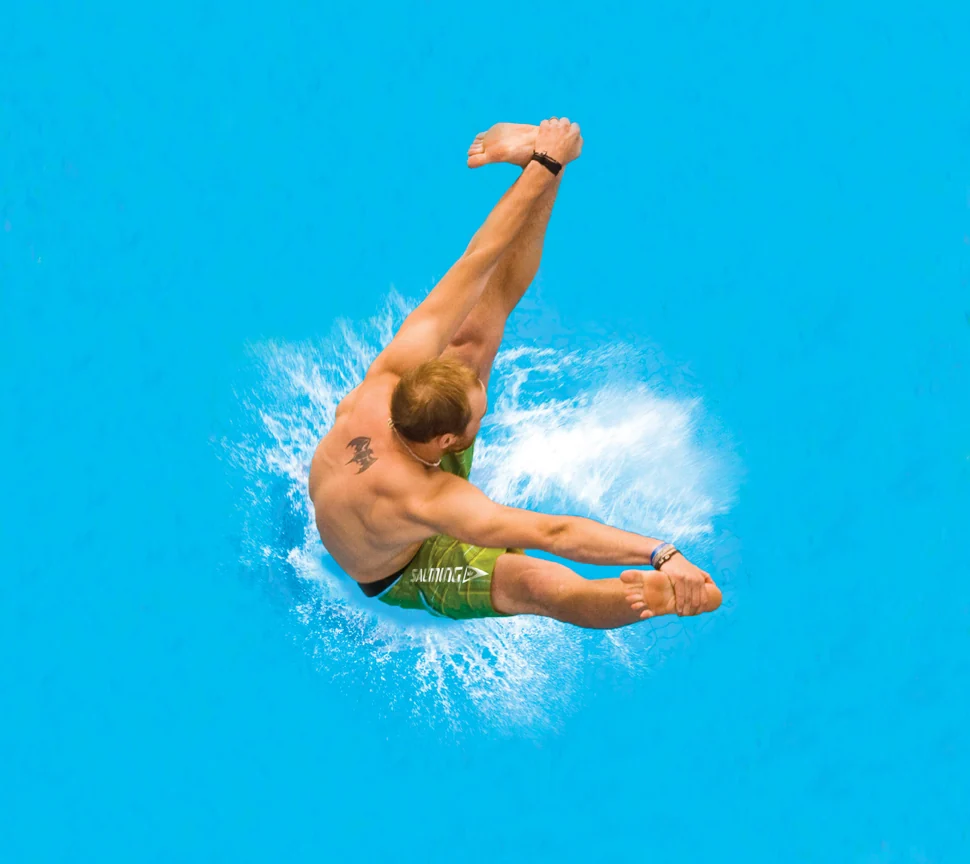
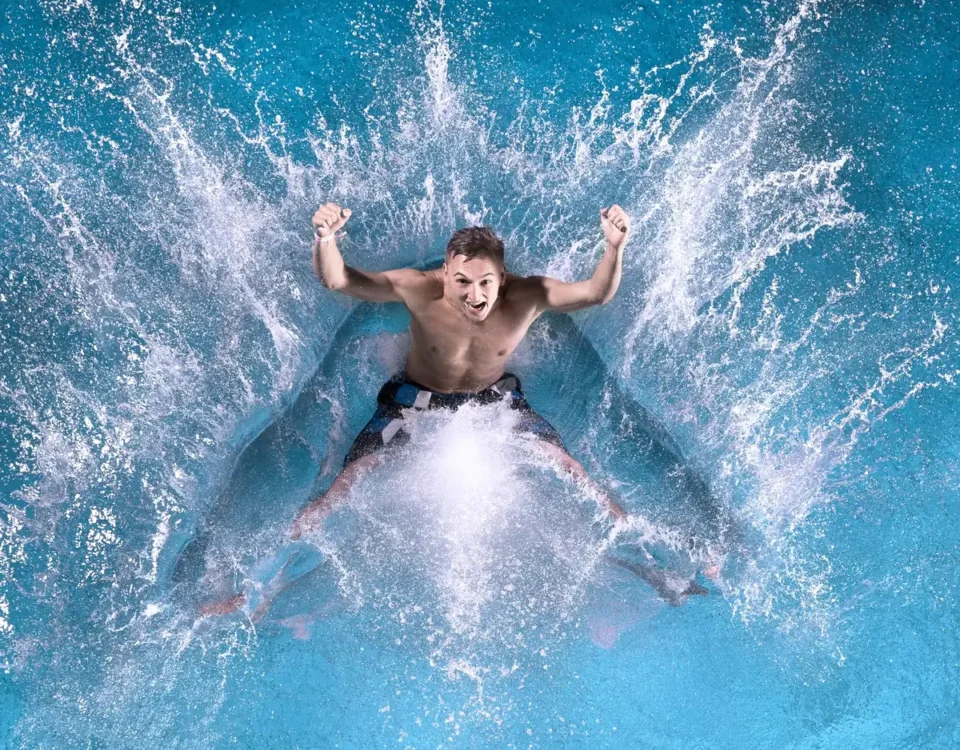
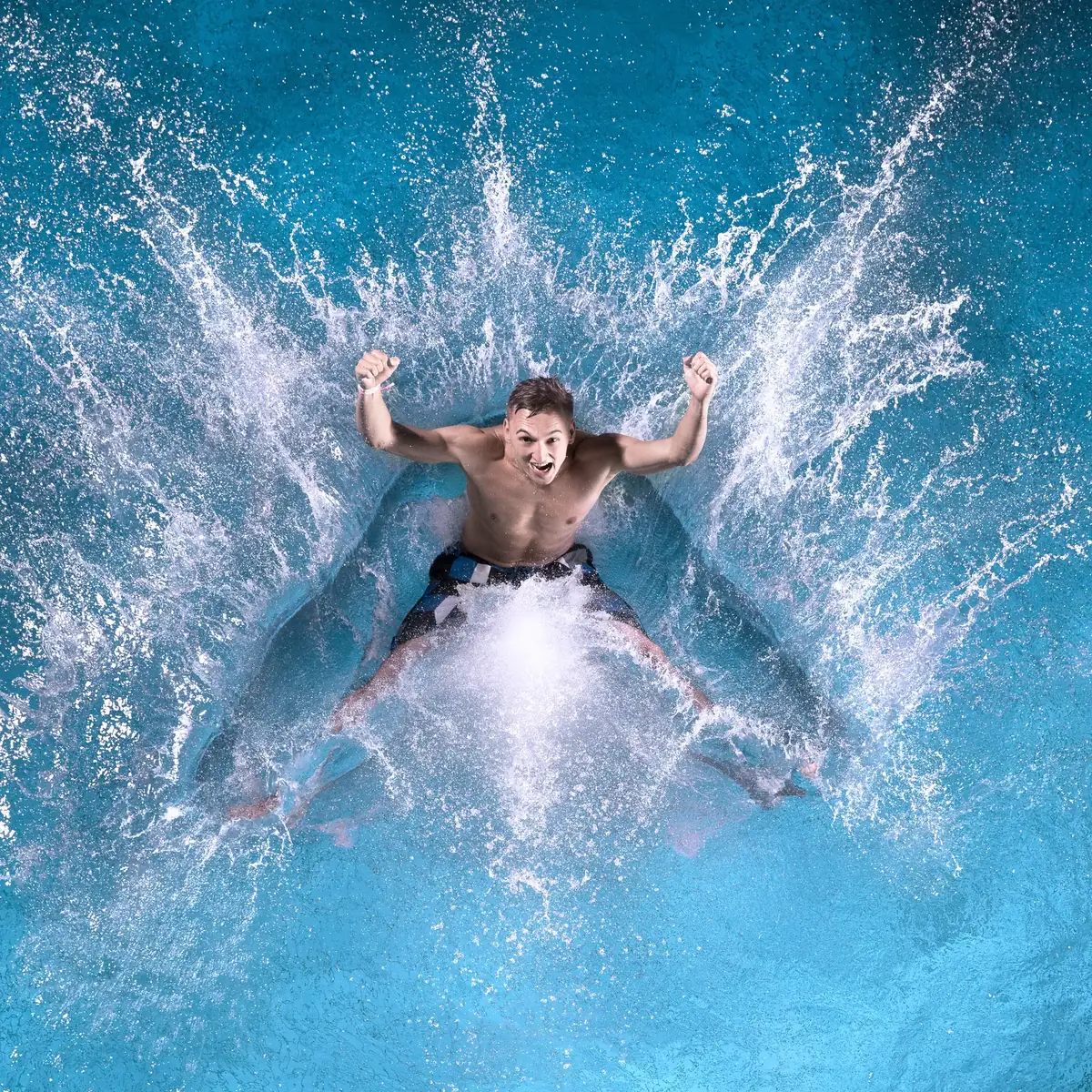
The original championship artwork shows how the movement was communicated: blue water filling the frame, a sharply defined body above it. Its camera metadata points to May, not the August final. It belongs to the visual build-up to 2009.
Summer began on wet paving.
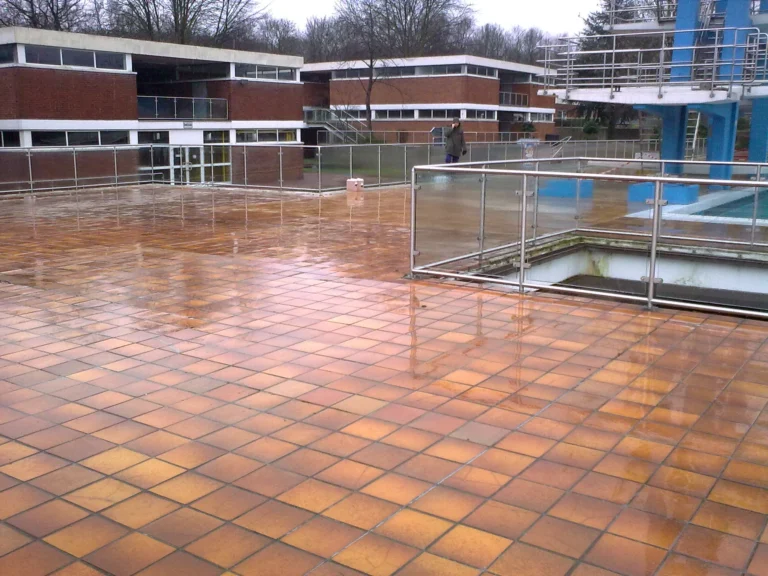
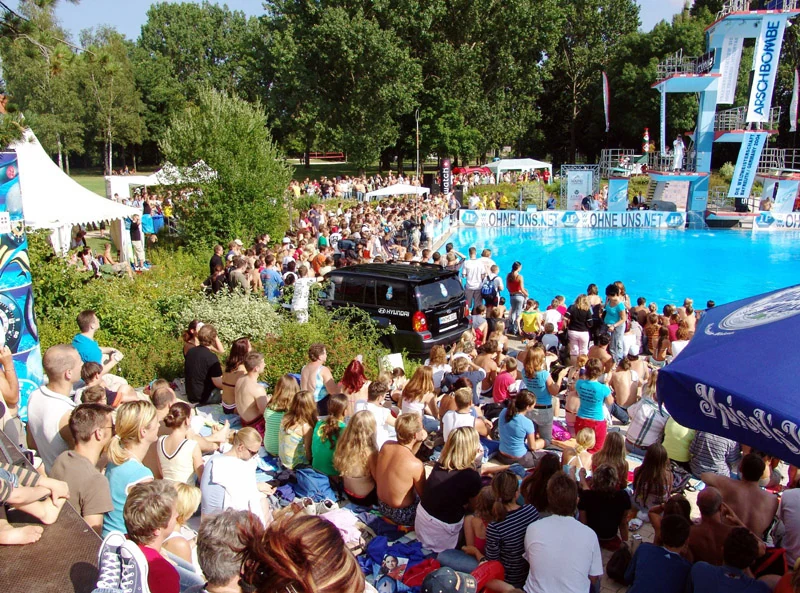
Another part of the archive looks nothing like a final. Wet paving, an empty pool area, bare trees. The file belongs to the Grugabad site visit in March 2009. Before the summer photographs came the task of looking at the place as it was.
We cannot hear the conversation from that walk. The image still preserves the distance between planning and event day: where people would gather, where the water would be, how much space surrounded the tower. Those questions are part of an event’s history too.
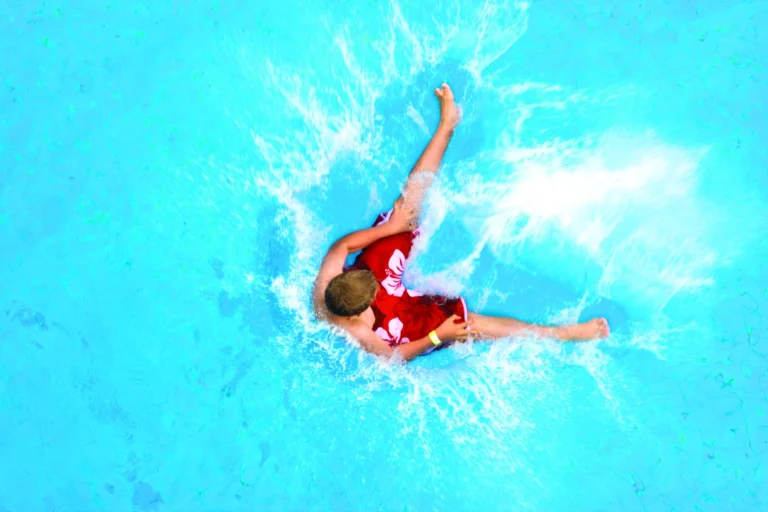
A separate photograph was prepared for the Bremen Cup artwork. It shows another use of the year’s visual language, not evidence that this particular photograph was taken in Bremen.
The hands around the sport.
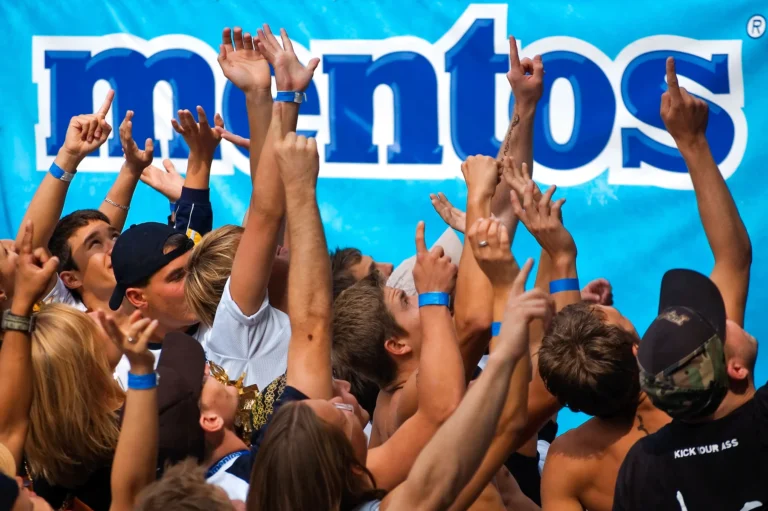
Hands point upward. Faces crowd together. The picture came into the 2009 programme archive from an earlier moment; its metadata records August 2008. It stays dated that way rather than becoming a fictitious Essen celebration.
The programme foreword thanks athletes and spectators for helping build the sport. Seen beside this photograph, that acknowledgement has a human scale. A championship has results, but it also has the people around them: close enough to share a frame, not always named in a table.
Someone has to hold the camera.
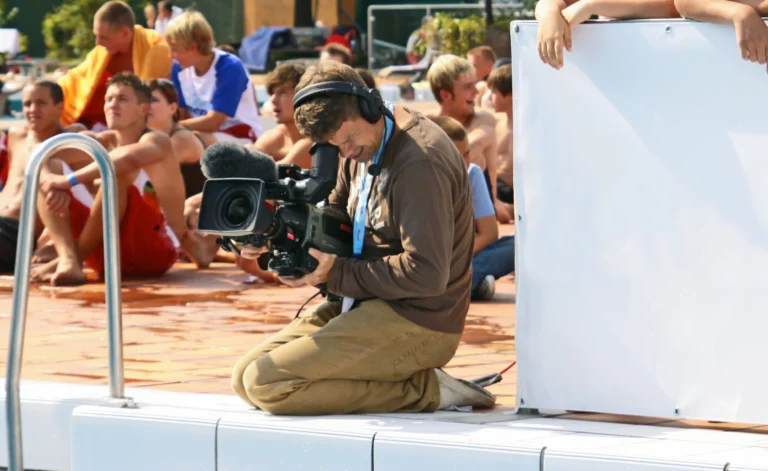
A camera operator kneels beside the pool, headphones on, looking down into the viewfinder. Behind him, people sit close to the water. The picture brings another kind of concentration into view: the work of recording the sport.
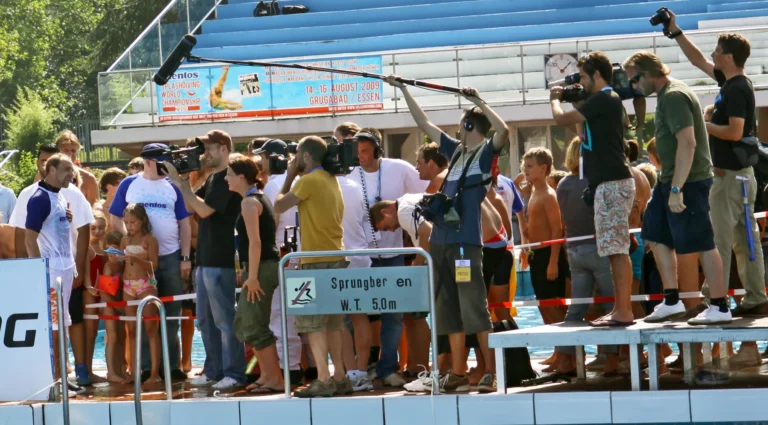
In the second frame, several camera crews stand beside one another. A boom microphone reaches across the group. The banner behind them identifies the championship at Grugabad, Essen, on 14–16 August 2009. Both files survived in the following year’s design folder. They belong here, beside the people whose work carried the pictures beyond the pool.
From the original archive
Essen 2009. Two competitions, two sets of results.
The first German Championship took place in May; the World Championship followed in August. Their results belong to different competitions and remain clearly separated here.
Public selection. Place numbers from the original record have been retained.
German Championship · men
- Felix Hirt
- Christoph Lambert
- Florian Berwanger
German Championship · juniors
- Tarik Behery
- Tim Heckel
- Florian Berwanger
World Championship · men
- Felix Hirt
- Marcel Ledwon
- Lukas Elvermann
World Championship · women
- Jenny Netsch
- Sarah Hidlmayer
Worlds · junior boys
- Lucas Kruse
- Malte Kruse
- Lukas Elvermann
Worlds · junior girls
- Laura Hennek
- Lena Hector
Worlds · men’s synchro
- Christian Guth / Felix Hirt
- Peter Glatschke / Heinrich Pfaff
- Florian Berwanger / Christoph Lambert
Worlds · women’s synchro
- Sarah Hidlmayer / Lena Hector
Sources: original German Championship results sheets, dated 17 May 2009, and World Championship closing release no. 6, August 2009, founder’s archive. The German Championship follow-up and World Championship results release on openPR are also publicly available. The two competitions have not been combined into one ranking.